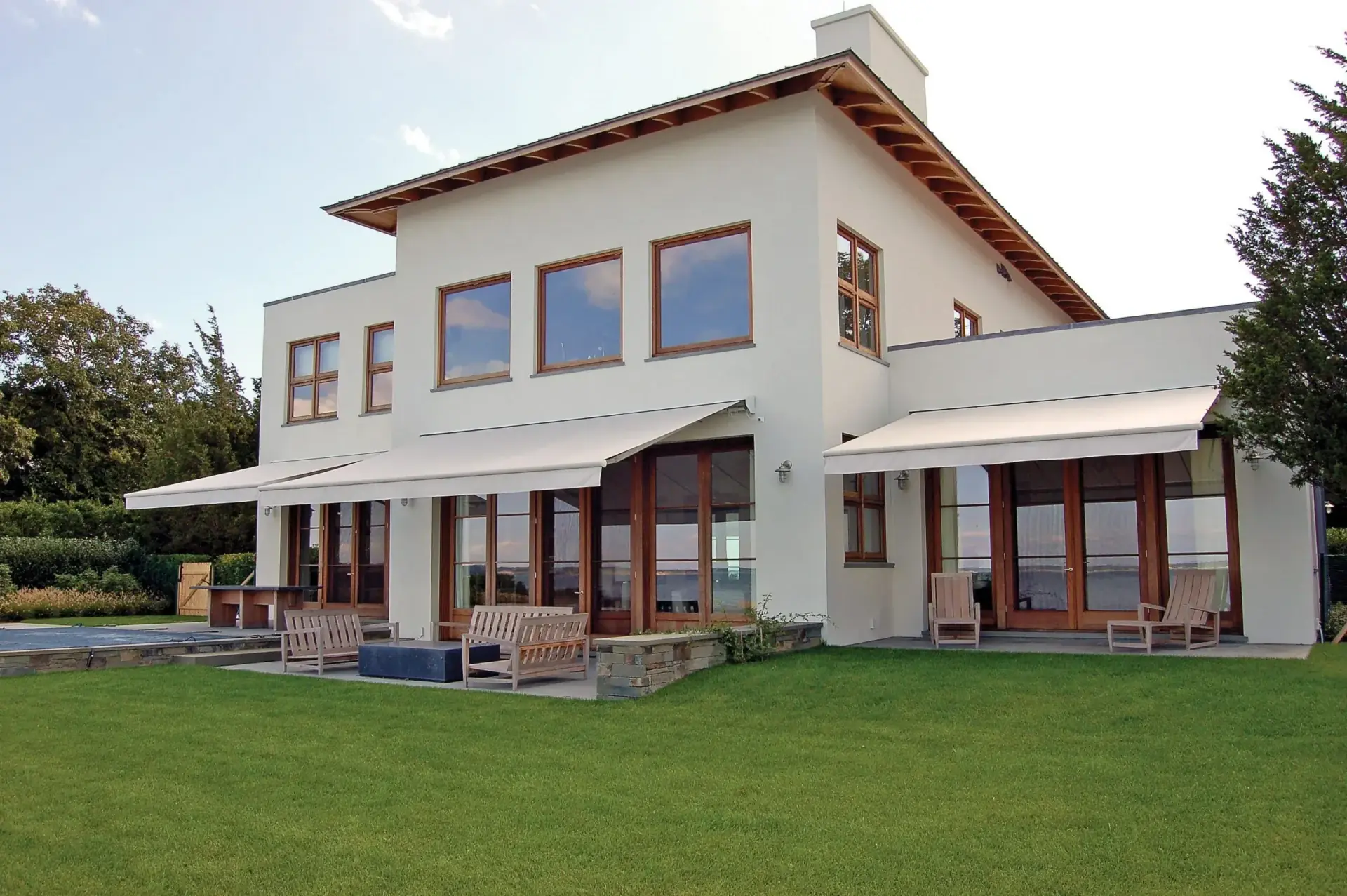
Window Treatment in Copeland Farms, Greenfield
Custom Greenfield window treatment crews serving Copeland Farms homeowners with free in-home measure, repair, replacement.
If you live in this area of Greenfield, some of these answers will sound familiar. Older openings, shallower depth and out-of-square conditions come up regularly and none of them are a problem once they're measured.
- Services: faux wood blinds, wood blinds, vertical blinds, aluminum mini blinds
- Service area: Copeland Farms, Greenfield, IN and surrounding areas Getting somebody out to measure is the easy part and happens on a normal schedule. After that the fabricator needs roughly two to five weeks. We give you a specific window when we write the order.
- Insured and bonded
- Serving Greenfield, IN since 2008
Local Window Treatment Experience in Copeland Farms
Drywall returns change where a bracket can go, and most people get the logic backwards. In the fruit street grid east of the Courthouse Square, shallow jambs push you to an outside mount. In Copeland Farms the reverse is true: the openings have consistent depth and take an inside mount cleanly, but there is no applied casing on the outside of them, so an outside mount has nothing but drywall to land on and has to reach the header. That is why we default to inside mount here and treat an outside mount as the decision that needs justifying, which is the opposite of how we work three miles south.</p><p style="font-size:16px;color:#4a5a6a;line-height:1.75;margin:16px 0 0">The second difference is the light itself. The post-1995 plats on Greenfield's edges were built on cleared farm ground and carry little to no effective canopy, while Green Meadows and the streets around the square sit under seventy years of trees. On Copeland Farms Drive the glass is doing all the work, with no help from anything outside it, through a July that averages an 85.2F high in Indianapolis and a muggy season running 25 May to 22 September. That is why the openness factor here runs tighter than we would specify on a shaded 1950s street, and why the energy argument for a cellular product is stronger.
We have served Copeland Farms homeowners through the full range of window treatment needs, from inspections and repairs to full replacements. Whatever the system, our Greenfield crew approaches every project with clear communication and respect for your property.
Production two story houses north of McKenzie Road
No build year is published for Copeland Farms specifically, and Hancock County's assessor data exposes no queryable year built field per parcel, so we will not put a date on it. What is sourced is the plat's name, its streets and its position north of the McKenzie Road corridor. The architecture is two story production traditional with some ranch, and the window schedule follows the city's post-1990 pattern: 16 to 24 openings on a house, half round or elliptical transoms over front facing windows, and a breakfast bay. Citywide, 6,755 Greenfield houses have been built since 1980, and all of them share the drywall return detail.
Home count, lot size and a price band are not published for Copeland Farms, so they get established on site rather than quoted from a listing. Greenfield's citywide median home value is $216,400 against an Indianapolis metro median of $291,400, and the median year built across all 10,744 units is 1995, which places a plat like this on the newer side of that line. The differentiator worth knowing is what the lots back onto. This is a farm named plat on the city's north edge, so rear elevations look at what was agricultural ground rather than at another house, and rear privacy is a smaller problem here than front facing glare.
Drywall returns, half round transoms and a breakfast bay
A house in Copeland Farms runs 16 to 24 openings, inferred from the city's post-1990 production stock rather than from a survey of this plat. Three features define the work. The openings are drywall returns with no applied casing, so there is depth for an inside mount and nothing to fasten to outside one. There is normally a half round or elliptical transom over the front facing window. And there is a breakfast bay, which is not one opening but three or five at angles that are never quite what the plan says. Larger plans in this era sometimes carry a two story great room wall; that is not verified for Copeland Farms and we look for it on the walk through rather than assuming it.
Squareness is the good news. Post-2000 production openings are the only third of Greenfield's stock that can be treated as reliably square, and Lutron's factory deduction of 1/16 inch per side behaves predictably against them, which is not true in the Residential Historic District. Two cautions remain. Wide rear openings still get checked, because width accumulates error even in newer construction. And the dominant exposure for this plat is not established in any published source, so we set the openness factor per elevation with a compass on the walk through instead of assuming the plat faces a particular way.
No casing to mount onto
Drywall returns give you clean inside mount depth and nothing on the outside to hold a bracket. An outside mount here has to reach past the drywall to the structure above the opening, which is doable but is a decision rather than a default. So Copeland Farms is the one part of Greenfield where we start from an inside mount and justify anything else, exactly the reverse of the shallow jamb houses on Apple and Cherry Street.
The half round transom over the front window
A half round or elliptical head is a template job, not a tape job. You either fabricate a fixed panel to the curve, which costs more and never operates, or you treat the rectangle below and leave the arch clear, which is honest and often the right call on a Copeland Farms front elevation you want light through. We will price both. What we will not do is quote a curve off a photograph.
The breakfast bay, angle by angle
A bay is three or five openings meeting at angles that the plan says are 135 degrees and the wall says are something else. Each panel gets its own finished width, and the corner treatment gets decided before the order: butt the ends and accept a light line, or run one continuous headrail across the bay. On a 16 to 24 opening house the bay is usually the second most expensive item after the front elevation.
Reliably square, with two exceptions
Only Greenfield's post-2000 third can be treated as dependably square, and this plat falls in it. That makes the standard 1/16 inch per side factory deduction predictable, which it is not in the historic districts. Still check the wide rear openings, where error accumulates across width, and check the exposure with a compass, because no published source establishes which way Copeland Farms Drive faces.
What we specify in Copeland Farms
Good depth, square openings and no canopy add up to a specification you can build around rather than work around. That is the reverse of the historic districts, where every product decision is a concession to the fabric. Here the questions are about performance and shape: what to do with the arch, how to handle the bay, and how tight an openness factor to run on unshaded glass. National pricing ranges are the only published ones for Greenfield: shutters $175 to $800 per window, custom treatments $250 to $2,600, stock shades $60 to $600. Fabrication runs 2 to 5 weeks. Work over $150 gets a written contract under IC 24-5-11, and we're insured and insured.
Composite plantation shutters
Composite rather than hardwood in this stock, because production room proportions carry a 2.5 inch or 3.5 inch louver in poly without looking wrong, and composite holds its line through an Indiana summer better in a breakfast area next to a door that opens all day. An L-frame sits neatly against a drywall return. It is also the cleanest way to fill a bay, with a panel per angle and the corners worked out before fabrication.
Zebra dual roller shades
For the rear elevation, where the lots back onto what was farm ground and the view is worth keeping. Banded fabric gives you an open view stripe or a closed privacy stripe on one continuous cord loop, which suits a great room where the requirement changes through the day. Because rear openings here are wide, we add a center support past about 48 inches and check the finished width against tube deflection before the order goes in.
Faux wood blinds on an inside mount
The same product we outside mount on the fruit street grid, used the opposite way. Drywall returns give clean depth, so a 2 inch faux wood sits inside the opening here with the headrail fully recessed and no valance needed on the wall. Faux wood rather than wood in a bay off a kitchen, where humidity through the muggy season from 25 May to 22 September will move a real slat over time.
Cellular shades
The energy case is stronger in Copeland Farms than anywhere older in Greenfield, because these plats were built on cleared farm ground with little effective canopy and the glass carries the whole load. DOE and ORNL testing found cellular shades saved up to 20 percent heating energy and up to 15 percent of total heating and cooling energy against a bare window. Climate Zone 5A gives you both seasons: a 20.9F January average low and an 85.2F July average high in Indianapolis.
The north edge, past McKenzie Road
Copeland Farms Dr is the spine of the plat, with Murdoch Dr, Fallon Ln and Walnut Trace running off it, and the whole thing sits north of the E McKenzie Rd corridor near N Franklin St and Martindale Dr. McKenzie Road is the practical dividing line in Greenfield between the older half of the city and its subdivision half, and crossing it changes the housing stock immediately. The Courthouse Square and its 1896-97 Hancock County Courthouse are a short drive south down State Street, and the Pennsy Trail runs through the older part of town. Schools are Greenfield-Central Community School Corporation, as they are citywide.
There is an association in Copeland Farms, and its rules are worth reading
Copeland Farms does have a homeowners association, which separates it from Green Meadows and the Candlelite streets where none is recorded. What is not published is the association's name, whether it operates an architectural review process, or whether it says anything about window coverings. We looked, and no recorded covenant on street facing window covering color or on reflective coverings was found anywhere in Greenfield. Treat that as unknown rather than as absent. If you hold a covenant packet for Copeland Farms Drive or Walnut Trace, the two clauses to check before ordering are any restriction on the color visible from the street and any rule about exterior products such as awnings or exterior solar shades. Interior treatments are rarely addressed, but rarely is not never.
Window Treatment Services in Copeland Farms
Every service Greenfield Window Treatments offers across Greenfield is available to Copeland Farms homeowners.
Faux Wood Blinds in Copeland Farms
PVC slats for the rooms Greenfield humidity would ruin
Learn more →Wood Blinds in Copeland Farms
Basswood where the casing is real and the room is dry
Learn more →Vertical Blinds in Copeland Farms
Still the honest answer for a wide door opening
Learn more →Aluminum Mini Blinds in Copeland Farms
The honest blind for basements and rental turnovers
Learn more →Roller Shades in Copeland Farms
One tube, and the light gap stated before you order
Learn more →Solar Shades in Copeland Farms
Keep the view of the open ground, lose the glare
Learn more →Cellular Shades in Copeland Farms
The only shade with real DOE test numbers behind it
Learn more →Zebra Shades in Copeland Farms
Two bands on one tube, and the depth it demands
Learn more →Roman Shades in Copeland Farms
Fabric folds for windows that were never standard sizes
Learn more →Woven Wood Shades in Copeland Farms
Natural weave for the streets that still have canopy
Learn more →Blackout Shades in Copeland Farms
Dark enough to sleep, honest about the edges
Learn more →Plantation Shutters in Copeland Farms
Framed millwork for openings that stopped being square
Learn more →Cafe Shutters in Copeland Farms
Privacy at the sidewalk, daylight above it
Learn more →Motorized Shades in Copeland Farms
Power for the glass you can't reach from the floor
Learn more →Custom Drapery in Copeland Farms
Panels sewn to the room and hemmed after they hang
Learn more →Valances & Top Treatments in Copeland Farms
The finish over the headrail, and nothing more
Learn more →Exterior Solar Shades in Copeland Farms
Stop the heat outside the glass, before it's inside
Learn more →Retractable Awnings in Copeland Farms
Shade you can put away before the wind arrives
Learn more →Commercial Window Treatments in Copeland Farms
Specified elevation by elevation, documented opening by opening
Learn more →Skylight Shades in Copeland Farms
Shades for glass over your head, tensioned to stay flat
Learn more →Sliding Glass Door Blinds in Copeland Farms
The stack has to land somewhere off your operating panel
Learn more →Panel Track Blinds in Copeland Farms
Wide fabric panels, and honest math on the stack depth
Learn more →Sheer Shades in Copeland Farms
Fabric vanes floating between two sheers, closed but never dark
Learn more →Pleated Shades in Copeland Farms
One layer of folded fabric, no cell and no air pocket
Learn more →Bamboo Shades in Copeland Farms
Split cane and reed, and what passes through every weave
Learn more →Dual Shades in Copeland Farms
Banded fabric on one tube, and the level it depends on
Learn more →Top-Down Bottom-Up Shades in Copeland Farms
Cover the bottom, keep the top, carry twice the hardware
Learn more →Cordless Blinds in Copeland Farms
No cord to reach, and springs that weaken with the years
Learn more →Hardwood Shutters in Copeland Farms
Real basswood, scaled to the room and honest about humidity
Learn more →Composite Shutters in Copeland Farms
Painted panels that ignore humidity and weigh more doing it
Learn more →Smart Home Shade Integration in Copeland Farms
Protocols, hubs, and what happens when the hub retires
Learn more →Blind Repair & Restring in Copeland Farms
Fix what's fixable, and say so when it isn't
Learn more →Shutter Repair in Copeland Farms
Hinges, pins and tension screws, once we know it can match
Learn more →Motorization Retrofit in Copeland Farms
A motor inside the shade you already own, if it fits
Learn more →Outdoor Patio Shades in Copeland Farms
Roll down shade for a porch, anchored into real structure
Learn more →Office Window Treatments in Copeland Farms
One openness factor per elevation, one submittal per phase
Learn more →Healthcare Window Treatments in Copeland Farms
Cleanable, cordless, and documented in the submittal
Learn more →Multifamily Window Treatments in Copeland Farms
One spec per floor plan, with yardage reserved for phase two
Learn more →Where Else We Work Besides Greenfield
Copeland Farms is one of several Greenfield communities we serve. We measure and install across Greenfield, Hancock County, and surrounding areas.
Copeland Farms Window Treatment FAQ
Questions we hear most often from Copeland Farms homeowners.
Free Assessment in Copeland Farms
Schedule a free, no-obligation window covering inspection. We respond promptly to all Copeland Farms inquiries.