Pleated Shades in Greenfield, IN
One layer of folded fabric, no cell and no air pocket
What follows covers the practical side of this service: how it's measured, what changes the price, how long fabrication takes and what maintenance it needs once it's hanging.
- Service: Pleated Shades for Greenfield homeowners
- Service area: Greenfield, IN and surrounding areas Realistic sequence: appointment for the measure, a written specification, then fabrication of two to five weeks, then install. None of it needs rushing, and pushing the factory is where mistakes on custom sizes come from.
- Insured and bonded
- Serving Greenfield, IN since 2008
Expert Pleated Shades for Greenfield Homes
A pleated shade is a single layer of fabric creased into permanent folds, and it belongs in Greenfield's middle aged subdivisions rather than at the top of a budget. The ACS counts 495 houses here from the 1980s and 1,768 from the 1990s, which is the city's first true subdivision wave: Bridgewater Drive, Flagstone Drive, Shadow Creek Pass and Parkside Circle on the southeast side, plus the older sections of Fairway Village. Those houses run 16 to 24 openings apiece and most of those openings are secondary. A laundry, an upstairs hall, a spare bedroom nobody sleeps in: that's where a pleated shade does honest work at a sensible number.
The disclosure that matters is what a pleated shade isn't. It looks like a cellular shade from six feet away and it doesn't behave like one, because a cellular is two layers forming a honeycomb that traps air and a pleat is one layer with nothing behind it. The Department of Energy and Oak Ridge National Laboratory measured cellular shades saving up to 20 percent on heating energy against a bare window, and that finding is about the air pocket, not about the pleat. Indiana sits in climate zone 5A with a January averaging a 20.9 degree low, so in a room you actually use, the cell is worth the difference.
Signs You Need Pleated Shades
If you notice any of these in your Greenfield home, it is worth booking a measure. None of it is urgent, and none of it fixes itself either.
Route holes glow in a line after dark
An angle top window never had a shade that fits
The cord lock has to be reset every single morning
A bonus room over the garage bakes in the afternoon
Trim is too shallow for a deeper headrail
An office window needs cover but not insulation
A house needs every window covered before listing
A spare bedroom still has nothing on the window
The shade creeps down an inch overnight, every night
Cellular quotes came back higher than the room needs
How Greenfield Window Treatments Handles Pleated Shades
Every job follows the same five-step process. Transparent, thorough, and done right the first time.
Pleat size set to the opening
Custom fabrication, two to five weeks
Full travel run twice per unit
Stock versus custom explained honestly
Top-down bottom-up priced separately
Pleated Shades in Greenfield
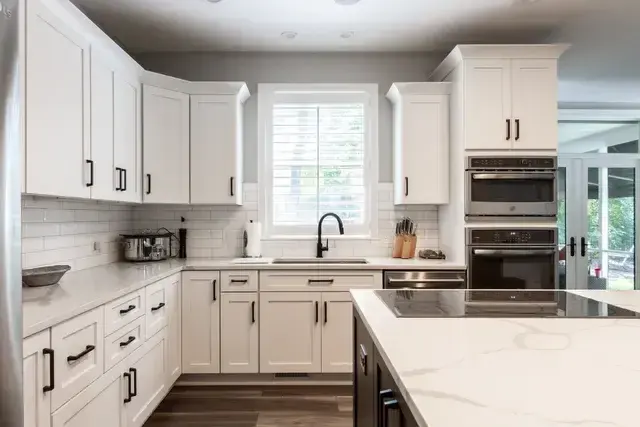
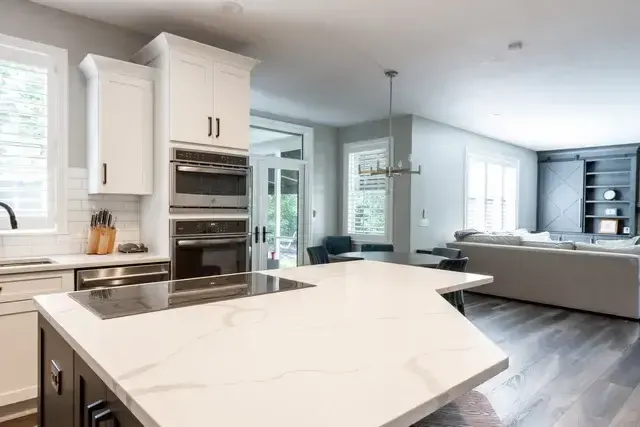
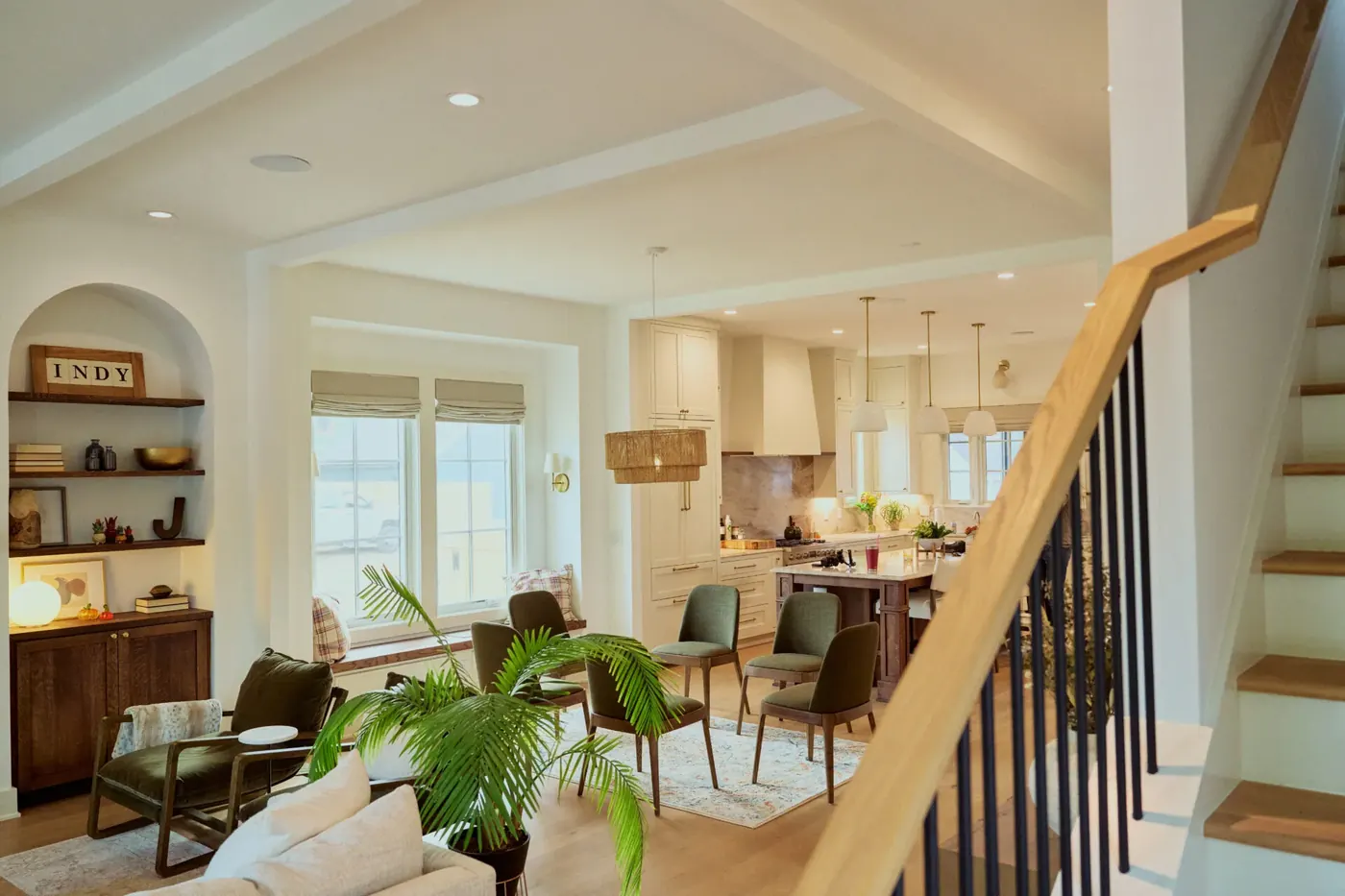
Photographs from real pleated shades jobs completed by our crew in Greenfield and surrounding areas.
What Pleated Shades Includes
Every Greenfield job is documented item by item. Here is what the crew covers.
The energy question answered honestly up front: a pleated shade is one layer of fabric with no cell behind it
Rooms steered to cellular instead wherever trapped air is the actual reason for the purchase
Rooms where pleated is the right call identified plainly, from secondary bedrooms to offices to a rental turnover
Pleat size set against the opening, a fine pleat on short glass and a larger pleat where the drop can carry it
Fabric opacity settled in writing before the order, light filtering against room darkening
Reflective backing considered on hard west and south exposures, described as what it is rather than as an energy rating
Three widths and three heights per opening with a diagonal check for square
Mounting depth read so the headrail sits inside the opening where an inside mount is what you want
Stack at the top measured against the glass, since a stacked pleated shade still covers the top few inches
Cordless lift specified in rooms children use, with products conforming to ANSI/WCMA A100.1-2022 for cord access
Route holes disclosed on any corded unit, because a closed pleated shade shows those holes as a line of small bright dots
Light gap per side written onto the paperwork, along with the 1/16 inch per side factory deduction Lutron publishes
Top-down bottom-up priced where a room wants daylight high and cover low
Arched, angled and fan-shaped openings templated on site, since pleated fabric is what those get built from
Wide spans reviewed for headrail deflection and split into two units where that is the right answer
Every opening in a room ordered on one purchase so the fabric comes off the same run
The paperwork done properly, with IC 24-5-11 requiring scope, dates and total price on residential jobs over $150
Bottom rail leveled and full travel run twice at every unit before we pack up
What Pleated Shades Cost in Greenfield
National category figures put stock shades near $60 to $600 a window and custom-fabricated shades roughly $250 to $2,600. Those are published national ranges, not a price for any opening in Greenfield. Pleated sits low in the custom band and that is the honest appeal of it. One layer of fabric, a light headrail and a simple lift add up to less than a double cell shade with a blackout fabric and two lift systems. Where the number climbs is the same place it climbs on everything: width, drop, a room darkening fabric, a cordless lift on a heavy unit, or a templated arch that somebody has to build to a pattern. Greenfield Window Treatments prices from measured openings across Hancock County rather than from a per-window average.
How Pleated Shades Differ by Product
Every product in this trade behaves differently in a room. Here is what that means for this work.
1 inch pleat: The standard and the one most rooms get. It holds a crisp horizontal line at ordinary window heights, it stacks small at the top, and it keeps the scale right on the bedroom and office windows this product usually goes into.
Fine pleat: A smaller fold for short windows, transoms and specialty shapes. More folds across the same drop means a finer face, and it's what a small arch or a narrow sidelight needs so the shape doesn't look coarse.
2 inch pleat: A larger fold that suits tall glass and big rooms, where a fine pleat across a long drop starts to read as texture rather than as a line. Fewer folds also means a slightly smaller stack for the same height.
Light filtering fabric: The everyday specification. Diffused daylight comes through, the view does not, and the room stays bright. It's the fabric that suits an office, a stairwell or any bedroom where waking up with the sun isn't a problem.
Room darkening fabric: A denser fabric that cuts most light through the face. It gets a bedroom dim rather than dark, since a pleated shade doesn't seal at the edges and an inside mount still passes light down both sides.
Reflective backing: A metallized back face that bounces some of the sun striking the shade back at the glass. It's a real property of the fabric and it's not an energy rating, and we describe it that way rather than putting a number on it.
Cordless spring lift: A spring lift with no operating cord on the product, and the version we specify in any room a child uses. It also removes the route holes from the conversation, since there's no lift cord passing through the fabric.
Corded lift with a cord lock: The traditional and least expensive control. The lift cord runs through holes punched in the pleats, which is exactly where a closed shade shows a vertical line of small bright dots at night. Worth knowing before you save the money.
Top-down bottom-up: Two rails on one shade, so the top can drop for daylight while the bottom stays up against a sidewalk. It adds a second lift system and its own hardware, which is where much of the extra cost comes from.
Fixed arch and angle-top units: A half-round, a quarter-round or an angled top built to a site template and left fixed. Pleated fabric is what these get made from, because a pleated fan holds its shape where a rolling product simply can't follow the geometry.
See What Each Fabric Does To The Light
Pick a fabric below and the window updates. It's a drawing rather than a photograph, so read it as a rough guide to what each family does in a Greenfield room, and to what it doesn't do.
Openness factor is a measured fabric spec, so you can compare it line to line. The category names are not measured. One maker's room darkening can behave like another maker's light filtering, which is why the sample books come to the measure and get opened in the room they're going in, at the hour that room has the problem.
Pleated Shades FAQ
Questions we hear most often from Greenfield homeowners considering pleated shades.
Pleated Shades Across Greenfield
We measure and install in every one of these Greenfield neighborhoods. Each has its own page with the build eras, window conditions and mounting notes for that section.
- Pleated Shades in Greenfield Courthouse Square Historic District
- Pleated Shades in Greenfield Residential Historic District
- Pleated Shades in The Apple, Berry, Cherry and Date street grid
- Pleated Shades in Green Meadows
- Pleated Shades in The Candlelite, Gaslite and Coachlite streets
- Pleated Shades in Copeland Farms
- Pleated Shades in Fairway Village
- Pleated Shades in Brookstone, Woodstream and Willowview
- Pleated Shades in Meridian Springs
- Pleated Shades in Winfield Park and the Old Glory streets
- Pleated Shades in The Ridges Over Brandywine
- Pleated Shades in Brandywine Fields
- Pleated Shades in Hancock Gateway Park
Other Window Treatment Services in Greenfield
Greenfield Window Treatments handles the full scope of window treatment work. Explore our other services below.
Schedule Your Free In-Home Measure in Greenfield
Reach Us Directly
Our team prioritizes scheduled measures and service calls, and books in-home measures during business hours.
Ready to Book Your Measure?
Call us to set up an in-home measure, or to ask about a treatment that has stopped working. We will talk it through on the phone first.