
Shutter Repair in Greenfield by Greenfield Window Treatments
Hinges, pins and tension screws, once we know it can match
What follows covers the practical side of this service: how it's measured, what changes the price, how long fabrication takes and what maintenance it needs once it's hanging.
- Service: Shutter Repair for Greenfield homeowners
- Service area: Greenfield, IN and surrounding areas If a mechanism has failed rather than a whole product, that's a service call and it moves quickly since we're fitting parts rather than ordering a custom build. New orders follow the usual two to five week fabrication.
- Insured and bonded
- Serving Greenfield, IN since 2008
Expert Shutter Repair for Greenfield Homes
Shutters fitted during Greenfield's first subdivision wave are now old enough to need attention. The ACS counts 1,768 houses built here in the 1990s and 2,395 in the 2000s, so a shutter installed when a house on Woodstream Drive or in an older section of Fairway Village was new has had twenty five to thirty five years of daily tilting. Add the Residential Historic District, where panels sit in openings that have been moving on Hancock County clay for a century, and the repair list gets predictable: louvers that won't hold an angle, a panel that no longer latches, a frame separating from an opening that settled around it.
The first question is always whether a repaired panel can still match, and it has to be answered before anything gets scheduled. Shutter lines get discontinued, louver profiles change, stile widths change, and paint whites drift between production runs, so a replacement panel beside a twenty year old one can differ in shape as well as color. We photograph and measure the existing panels and check availability before booking the work. If it can't match, you should hear that while it's still your decision, rather than after a new panel is hanging next to the old ones on the same Fairway Village wall.
Signs You Need Shutter Repair
If you notice any of these in your Greenfield home, it is worth booking a measure. None of it is urgent, and none of it fixes itself either.
Panels catch on each other when you close them
The tilt rod has come away from a louver
One elevation of shutters has yellowed and the rest hasn't
A panel no longer sits flat against the frame
A louver spins loose in its hole and won't stay
Bathroom panels have opened at the joints
You're selling and the shutters look neglected
Magnets no longer hold the panels closed
A gap has opened at a top corner of the frame
A shutter has dropped at the latch edge
How Greenfield Window Treatments Handles Shutter Repair
Every job follows the same five-step process. Transparent, thorough, and done right the first time.
Hinges, tension and magnets tested
Frame checked against a level
Parts sourced and dates confirmed
Every panel closed, latched and tilted
Diagonals taken at each opening
Shutter Repair in Greenfield
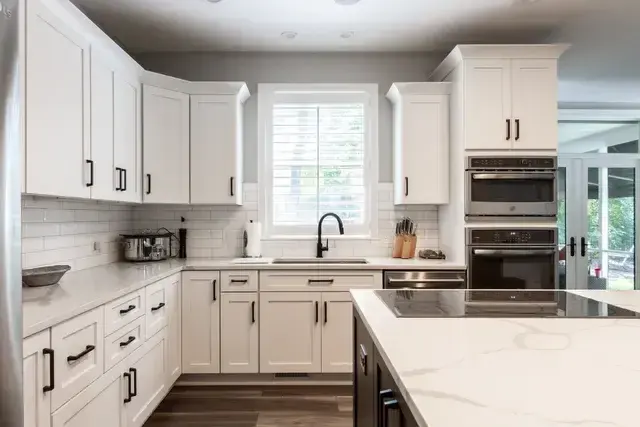
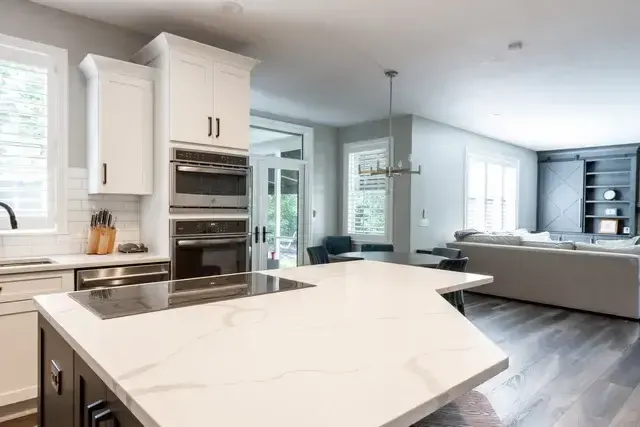
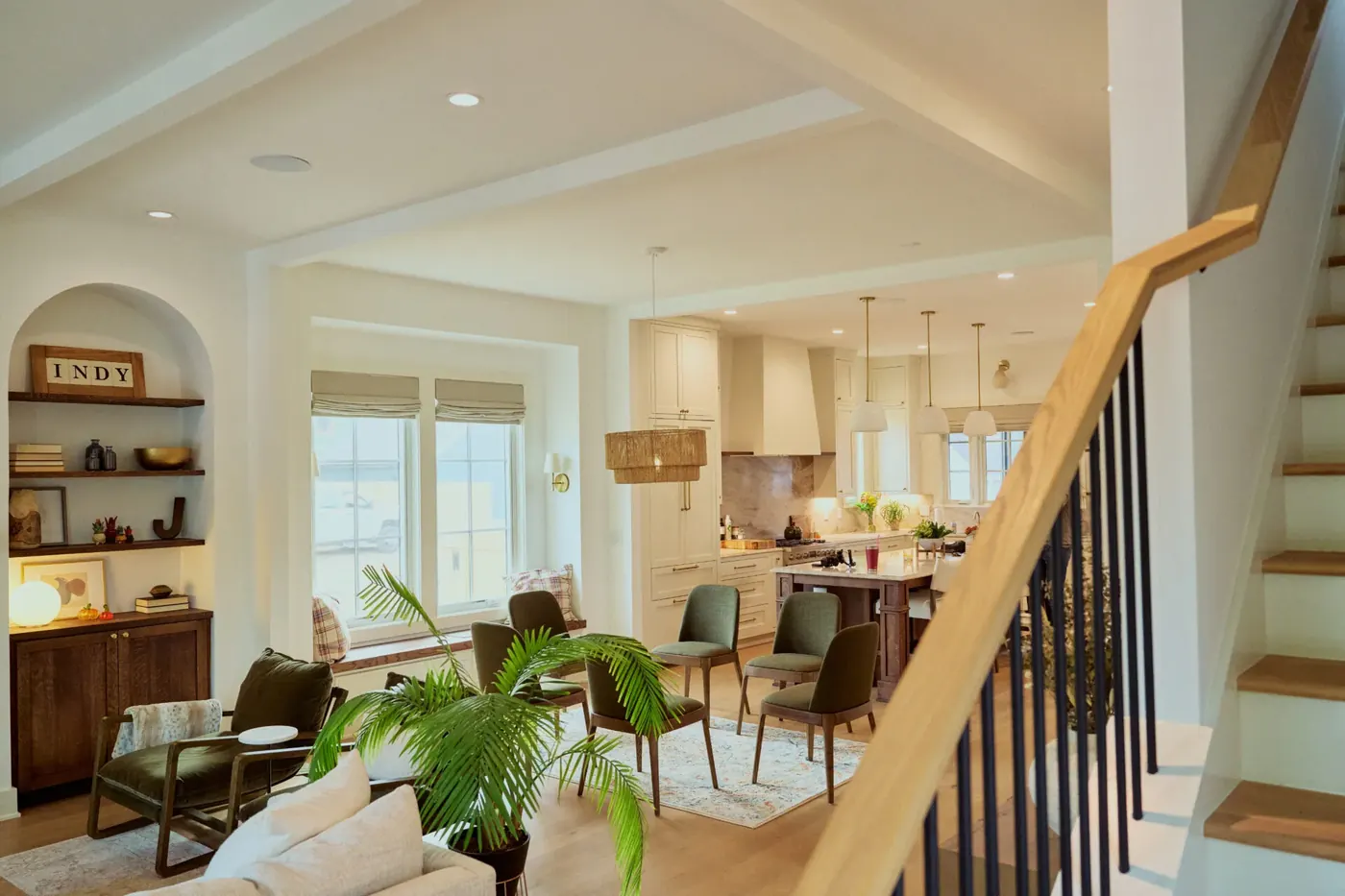
Photographs from real shutter repair jobs completed by our crew in Greenfield and surrounding areas.
What Shutter Repair Includes
Every Greenfield job is documented item by item. Here is what the crew covers.
Manufacturer, material and finish identified from the panel and the frame before any parts conversation starts
Match confirmed in writing before the visit is scheduled, since an unmatchable panel changes the whole plan
Louver size, frame profile and tilt style recorded, because those three decide whether a replacement panel can exist at all
Existing color compared against the current factory range under daylight rather than under a lamp
Age-related finish shift disclosed up front, as a new white panel next to a fifteen year old one rarely reads the same
Hinges checked for wear, pulled fixings and the sag that shows up first at the latch edge
Panel drop measured against the frame to see whether the panel has settled or the opening has
Louver tension tested one louver at a time instead of judged by feel across a whole panel
Broken louver pins, staples and tilt linkage diagnosed separately, since they fail for different reasons
Hidden rod linkage inspected inside the stile where the tilt has gone loose on a modern panel
Center tilt rod staples and clips checked on traditional panels where the rod has separated from a louver
Magnets, catch plates and strike points replaced where panels no longer hold closed
Frame plumb rechecked with a level, because a house that has settled will hold a good panel out of square
Shims and fixings reset where the frame itself has moved rather than the panel
Touch-up and refinishing limits explained honestly, as a factory finish can be blended and not truly restored
Wet-room damage assessed for what it is, since a hardwood panel that has taken years of shower humidity may be past repair
Work quoted per project after inspection, never against an invented range for a category nobody publishes
Every panel closed, latched and tilted through full travel before the visit ends
What Shutter Repair Costs in Greenfield
Nobody publishes a national range for shutter repair, so we won't pretend one exists. This work is quoted per project after somebody has seen the shutters, because a hinge reset and a rebuilt tilt linkage across six panels are not the same job. The number that does help is the replacement comparison. Published national figures for interior shutters run roughly $175 to $800 per window, and when a repair on one opening starts closing on that, replacing the opening is usually the smarter move. The other honest variable is matching. If your panels can't be matched, the choice stops being repair versus replace on one window and becomes a conversation about the whole elevation. Greenfield Window Treatments works that out before scheduling anything in Hancock County.
How Shutter Repair Differs by Product
Every product in this trade behaves differently in a room. Here is what that means for this work.
Hinge replacement and reset: Worn hinge knuckles, stripped fixings and pulled screws in a stile. This is the most common shutter failure by a distance, and it usually shows as a panel dropping at the latch edge and catching on its neighbor. A hinge set and fresh fixings often fix an entire opening.
Louver tension service: The friction that holds a louver where you leave it comes from tension pins or a tension screw in the stile. Louvers that fall open on their own or need two hands to move are tension problems, and most panels have an adjustment before anything gets replaced.
Broken louver replacement: A single cracked or snapped louver swapped out of the panel. This is where matching gets decided. Louver profiles are proprietary and sizes vary by manufacturer, so a louver from a line that has been discontinued is often the thing that ends a repair.
Center tilt rod repair: On a traditional panel the rod is stapled or clipped to each louver, and staples pull out. Reseating them properly means working into the louver edge without splitting it, and on an old painted panel that takes patience and a touch-up afterward.
Hidden rod linkage repair: On a clean-face panel the linkage lives inside the back of the stile, and when it loosens the louvers go out of step with each other. Getting to it means opening the stile, which is real work and part of the honest tradeoff for the look.
Magnet and catch replacement: Panels are held closed by small magnets set into the frame with steel catch plates on the panel. Magnets weaken and plates work loose. It's a small part and a fast fix, and it's the reason a lot of shutters stop sitting flat against their frame.
Frame reset and shimming: Where the opening has moved rather than the shutter, the fix is at the frame. Pulling the fixings, re-shimming to plumb and refastening puts the panels back into a square hole. It's the right repair on an older house that has settled since the shutters went in.
Panel replacement: A single panel remade to the existing frame where the old one is beyond repair. It depends entirely on whether the manufacturer still makes that louver size, frame profile and finish. When they don't, the honest options are a full elevation or living with the damage.
Touch-up and finish blending: Chips, dings and hinge scars addressed with a matched touch-up. Be realistic about what this achieves: a good blend disappears at three feet and is visible at one. Refinishing a factory-finished panel properly is a repaint, not a touch-up.
Wet-room reassessment: Where hardwood panels have spent years in a bathroom, the damage is often in the joints rather than on the surface. We'll tell you when the repair is a composite replacement for that room instead, since fixing the panel doesn't fix the reason it failed.
Shutter Repair FAQ
Questions we hear most often from Greenfield homeowners considering shutter repair.
Shutter Repair Across Greenfield
We measure and install in every one of these Greenfield neighborhoods. Each has its own page with the build eras, window conditions and mounting notes for that section.
- Shutter Repair in Greenfield Courthouse Square Historic District
- Shutter Repair in Greenfield Residential Historic District
- Shutter Repair in The Apple, Berry, Cherry and Date street grid
- Shutter Repair in Green Meadows
- Shutter Repair in The Candlelite, Gaslite and Coachlite streets
- Shutter Repair in Copeland Farms
- Shutter Repair in Fairway Village
- Shutter Repair in Brookstone, Woodstream and Willowview
- Shutter Repair in Meridian Springs
- Shutter Repair in Winfield Park and the Old Glory streets
- Shutter Repair in The Ridges Over Brandywine
- Shutter Repair in Brandywine Fields
- Shutter Repair in Hancock Gateway Park
Other Window Treatment Services in Greenfield
Greenfield Window Treatments handles the full scope of window treatment work. Explore our other services below.
Schedule Your Free In-Home Measure in Greenfield
Reach Us Directly
Our team prioritizes scheduled measures and service calls, and books in-home measures during business hours.
Ready to Book Your Measure?
Call us to set up an in-home measure, or to ask about a treatment that has stopped working. We will talk it through on the phone first.