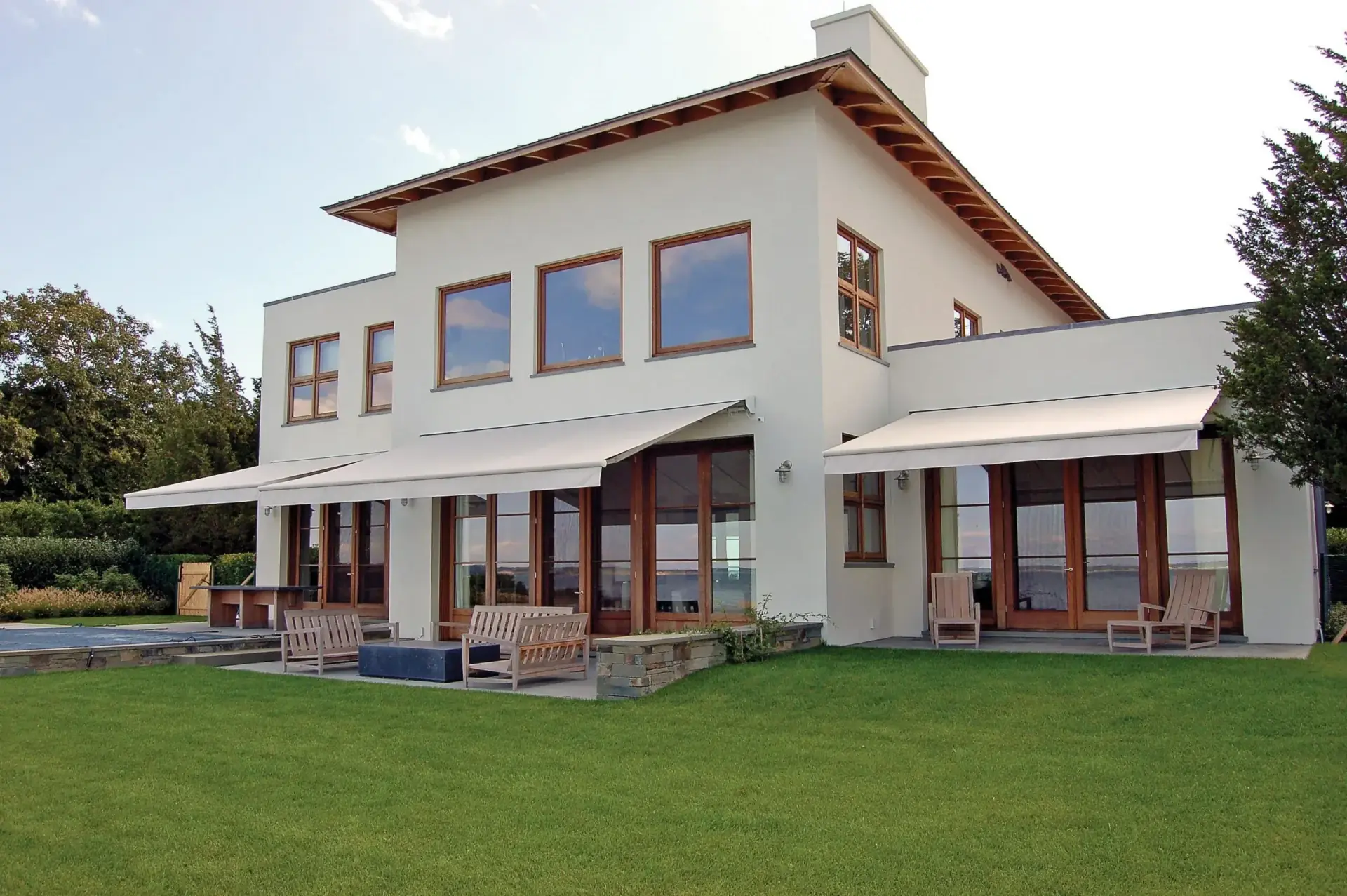
Window Treatment Across The Apple, Berry, Cherry and Date street grid (east of the square), Greenfield
Custom Greenfield window treatment crews serving The Apple, Berry, Cherry and Date street grid (east of the square) homeowners with free in-home measure, repair, replacement.
If you live in this area of Greenfield, some of these answers will sound familiar. Older openings, shallower depth and out-of-square conditions come up regularly and none of them are a problem once they're measured.
- Services: faux wood blinds, wood blinds, vertical blinds, aluminum mini blinds
- Service area: The Apple, Berry, Cherry and Date street grid (east of the square), Greenfield, IN and surrounding areas Getting somebody out to measure is the easy part and happens on a normal schedule. After that the fabricator needs roughly two to five weeks. We give you a specific window when we write the order.
- Insured and bonded
- Serving Greenfield, IN since 2008
Local Window Treatment Experience in The Apple, Berry, Cherry and Date street grid (east of the square)
Start with a tape at the stop, not with a catalog. This is the part of Greenfield where a 2 inch inside mount most often will not physically fit, and finding that out after fabrication is the expensive version of finding it out. Shallow jambs on small openings are the pattern right across the fruit streets, and a house on Cherry Street was never given a generous reveal in the first place. When the depth is not there, the honest answer is an outside mount on the trim or a shallow stack product rather than a squeeze that binds. We would rather say that on the first visit than write it on a change order in week four.</p><p style="font-size:16px;color:#4a5a6a;line-height:1.75;margin:16px 0 0">The second useful thing about this grid is its regularity, and that is genuinely rare in Greenfield. Apple, Berry, Cherry and Date run on the section lines in a true north south and east west pattern, so most front elevations face either due north or due south and the side gables take the direct low east and west sun. That repeats house to house here. No curved 1960s street like Coachlite Drive can offer it. Practically it means we can carry an exposure decision from one address to the next along E Third Street even though we can never carry a measurement.
We have served The Apple, Berry, Cherry and Date street grid (east of the square) homeowners through the full range of window treatment needs, from inspections and repairs to full replacements. Whatever the system, our Greenfield crew approaches every project with clear communication and respect for your property.
Small frame houses between State Street and the Blue River
Hancock County serves its assessor data through platforms with no queryable endpoint for a year built field, so no per plat construction date exists for these blocks and we will not invent one. What is sourced is the citywide distribution: 992 Greenfield houses predate 1940, 128 went up in the 1940s and 1,088 in the 1950s, and this grid sits inside that older half by layout and by position four blocks off the National Road. The architecture matches it. Small frame vernacular, post war minimal traditional and 1950s ranch, predominantly one and one and a half story, on lots tight enough that the house next door is part of your privacy problem.
Price and lot size are not published for the grid on its own. Greenfield's citywide median home value is $216,400, which is 0.74 times the Indianapolis metro median of $291,400 and the lowest of the five places in this batch, and this grid sits under that median rather than over it. The trade off is a good one for owners: the fruit streets carry the age of the historic districts a few blocks west without the price and without any design review at all. The Historic Board of Review's map covers the Courthouse Square and the State and Main frontage, not Apple Street.
Where a 2 inch inside mount stops fitting
A 900 to 1,500 square foot house on this grid runs 10 to 16 openings, which is inference from the era and the lot pattern rather than a survey. The shape story is short: a picture window in the front room and rectangular openings everywhere else is the pattern for this stock across central Indiana, and there are no arched heads, no two story foyer glass and no bay to template. That simplicity is real and it should show up in the price. What it does not simplify is the mounting decision, because the constraint here is depth rather than shape.
Depth at the stop is what decides your product on Apple, Berry, Cherry and Date. These openings are small and the jambs are shallow, so a 2 inch product with a full headrail often has nowhere to sit. Then add movement: post war frame on shallow foundations, seventy to a hundred years old, on Hancock County clay. Lutron publishes a factory deduction of 1/16 inch per side and inside mount light gaps of 3/4 inch per side on its Roller 20/64, and both of those figures assume the opening is square. On a shallow opening that is 3/8 inch out across its width, the deduction that clears one side leaves a gap you can read from the sofa.
Measure depth at the stop before anything else
On the fruit streets this is the first measurement, not the last. A 2 inch inside mount frequently will not fit here, and that is a physical fact about the opening rather than a preference. We record depth at the stop for all 10 to 16 openings and sort them into inside mount and outside mount groups before a single product is discussed. Houses on the same block do not sort the same way, so the survey is per address.
One picture window, then a dozen small ones
The front room picture window is the only opening in most houses on Berry or Date Street that needs a genuinely custom answer. The other 9 to 15 are small rectangles where the cost per opening is low and the fitting problem is depth. That split should shape the budget: put the money into the front room where the glare and the neighbors are, and take a simple repeatable product across the bedrooms rather than a premium one everywhere.
Due north or due south, block after block
The grid runs on the section lines, so front elevations face close to due north or due south and the gable ends catch the low east and west sun. That regularity is useful. It means the front room recommendation on E Second Street holds for the house across the street, and the two end rooms are the ones that need the tighter openness factor. It is the opposite of the curved plats north of McKenzie Road, where orientation changes lot to lot.
Out of square on shallow foundations
Frame houses seventy to a hundred years old on Hancock County clay, many on shallow foundations, have moved. A three point measure across width and height is standard here and it regularly turns up a quarter to a half inch of difference in one opening. That is enough to change a mount decision. It is also why we do not reuse a bedroom measurement for the bedroom next door, even in a house where the two openings were built the same size.
What actually fits on Apple, Berry, Cherry and Date
Product selection here is driven by depth and by the fact that one opening in the house is large and the rest are not. We build the quote in two parts for that reason. National ranges are the only published pricing available for Greenfield: stock shades run $60 to $600 per window against custom at $250 to $2,600, so on a house with 14 small openings the difference between stock and custom is real money and worth an honest conversation. Custom fabrication takes 2 to 5 weeks from the order date. Anything over $150 gets a written contract with the scope, dates and total price under the Indiana Home Improvement Contract Act (IC 24-5-11), and we're insured and insured.
2 inch faux wood blinds on an outside mount
Where the depth at the stop rules out an inside mount, mounting on the trim or the wall above solves it and gives you a cleaner line than a blind jammed into a shallow opening. Faux wood rather than real wood in these houses, because small post war rooms with modest conditioning and Indianapolis humidity from 25 May to 22 September will move a wood slat over a kitchen sink. Add a center support bracket on anything past about 48 inches.
Light filtering roller shades with a slim cassette
For the front room picture window, which is the one opening on this grid worth spending on. A slim cassette closes the top of the roller tube and keeps the look tight on a small facade. Decide roll direction at the order, since a reverse roll clears a deep sill but rules out a fascia, and on a shallow opening that trade off comes up. On a due south front elevation we run a light filtering fabric so the room stays bright at 4pm in January.
Cordless cellular shades
The cellular headrail is one of the shallowest made, which is why it still fits on this grid where a 2 inch product does not. Cordless lift matters in small bedrooms where the opening is close to a bed, and ANSI/WCMA A100.1-2022 is the product standard that governs it. There is a heating argument too: DOE and ORNL testing found cellular shades saved up to 20 percent heating energy against a bare window, which counts in a 1,100 square foot house in Climate Zone 5A.
East of the square, between US 40 and the Blue River
The grid sits immediately east of the Courthouse Square across State Street, four blocks from the 1896-97 Hancock County Courthouse and inside the Greenfield-Central attendance area. Apple, Berry, Cherry and Date run north south with N Apple St, N Cherry St and N Howard St carrying the pattern north of Main, while E Second, E Third, E Fourth and E South Streets cross them. E Main St through the grid is US 40, the old National Road, and N Blue Rd runs out toward the Blue River on the eastern edge. It is walkable to downtown, which is the practical difference between this grid and any subdivision on the city's north side.
Window Treatment Services in The Apple, Berry, Cherry and Date street grid (east of the square)
Every service Greenfield Window Treatments offers across Greenfield is available to The Apple, Berry, Cherry and Date street grid (east of the square) homeowners.
Faux Wood Blinds in The Apple, Berry, Cherry and Date street grid (east of the square)
PVC slats for the rooms Greenfield humidity would ruin
Learn more →Wood Blinds in The Apple, Berry, Cherry and Date street grid (east of the square)
Basswood where the casing is real and the room is dry
Learn more →Vertical Blinds in The Apple, Berry, Cherry and Date street grid (east of the square)
Still the honest answer for a wide door opening
Learn more →Aluminum Mini Blinds in The Apple, Berry, Cherry and Date street grid (east of the square)
The honest blind for basements and rental turnovers
Learn more →Roller Shades in The Apple, Berry, Cherry and Date street grid (east of the square)
One tube, and the light gap stated before you order
Learn more →Solar Shades in The Apple, Berry, Cherry and Date street grid (east of the square)
Keep the view of the open ground, lose the glare
Learn more →Cellular Shades in The Apple, Berry, Cherry and Date street grid (east of the square)
The only shade with real DOE test numbers behind it
Learn more →Zebra Shades in The Apple, Berry, Cherry and Date street grid (east of the square)
Two bands on one tube, and the depth it demands
Learn more →Roman Shades in The Apple, Berry, Cherry and Date street grid (east of the square)
Fabric folds for windows that were never standard sizes
Learn more →Woven Wood Shades in The Apple, Berry, Cherry and Date street grid (east of the square)
Natural weave for the streets that still have canopy
Learn more →Blackout Shades in The Apple, Berry, Cherry and Date street grid (east of the square)
Dark enough to sleep, honest about the edges
Learn more →Plantation Shutters in The Apple, Berry, Cherry and Date street grid (east of the square)
Framed millwork for openings that stopped being square
Learn more →Cafe Shutters in The Apple, Berry, Cherry and Date street grid (east of the square)
Privacy at the sidewalk, daylight above it
Learn more →Motorized Shades in The Apple, Berry, Cherry and Date street grid (east of the square)
Power for the glass you can't reach from the floor
Learn more →Custom Drapery in The Apple, Berry, Cherry and Date street grid (east of the square)
Panels sewn to the room and hemmed after they hang
Learn more →Valances & Top Treatments in The Apple, Berry, Cherry and Date street grid (east of the square)
The finish over the headrail, and nothing more
Learn more →Exterior Solar Shades in The Apple, Berry, Cherry and Date street grid (east of the square)
Stop the heat outside the glass, before it's inside
Learn more →Retractable Awnings in The Apple, Berry, Cherry and Date street grid (east of the square)
Shade you can put away before the wind arrives
Learn more →Commercial Window Treatments in The Apple, Berry, Cherry and Date street grid (east of the square)
Specified elevation by elevation, documented opening by opening
Learn more →Skylight Shades in The Apple, Berry, Cherry and Date street grid (east of the square)
Shades for glass over your head, tensioned to stay flat
Learn more →Sliding Glass Door Blinds in The Apple, Berry, Cherry and Date street grid (east of the square)
The stack has to land somewhere off your operating panel
Learn more →Panel Track Blinds in The Apple, Berry, Cherry and Date street grid (east of the square)
Wide fabric panels, and honest math on the stack depth
Learn more →Sheer Shades in The Apple, Berry, Cherry and Date street grid (east of the square)
Fabric vanes floating between two sheers, closed but never dark
Learn more →Pleated Shades in The Apple, Berry, Cherry and Date street grid (east of the square)
One layer of folded fabric, no cell and no air pocket
Learn more →Bamboo Shades in The Apple, Berry, Cherry and Date street grid (east of the square)
Split cane and reed, and what passes through every weave
Learn more →Dual Shades in The Apple, Berry, Cherry and Date street grid (east of the square)
Banded fabric on one tube, and the level it depends on
Learn more →Top-Down Bottom-Up Shades in The Apple, Berry, Cherry and Date street grid (east of the square)
Cover the bottom, keep the top, carry twice the hardware
Learn more →Cordless Blinds in The Apple, Berry, Cherry and Date street grid (east of the square)
No cord to reach, and springs that weaken with the years
Learn more →Hardwood Shutters in The Apple, Berry, Cherry and Date street grid (east of the square)
Real basswood, scaled to the room and honest about humidity
Learn more →Composite Shutters in The Apple, Berry, Cherry and Date street grid (east of the square)
Painted panels that ignore humidity and weigh more doing it
Learn more →Smart Home Shade Integration in The Apple, Berry, Cherry and Date street grid (east of the square)
Protocols, hubs, and what happens when the hub retires
Learn more →Blind Repair & Restring in The Apple, Berry, Cherry and Date street grid (east of the square)
Fix what's fixable, and say so when it isn't
Learn more →Shutter Repair in The Apple, Berry, Cherry and Date street grid (east of the square)
Hinges, pins and tension screws, once we know it can match
Learn more →Motorization Retrofit in The Apple, Berry, Cherry and Date street grid (east of the square)
A motor inside the shade you already own, if it fits
Learn more →Outdoor Patio Shades in The Apple, Berry, Cherry and Date street grid (east of the square)
Roll down shade for a porch, anchored into real structure
Learn more →Office Window Treatments in The Apple, Berry, Cherry and Date street grid (east of the square)
One openness factor per elevation, one submittal per phase
Learn more →Healthcare Window Treatments in The Apple, Berry, Cherry and Date street grid (east of the square)
Cleanable, cordless, and documented in the submittal
Learn more →Multifamily Window Treatments in The Apple, Berry, Cherry and Date street grid (east of the square)
One spec per floor plan, with yardage reserved for phase two
Learn more →What Counts as Local to Greenfield
The Apple, Berry, Cherry and Date street grid (east of the square) is one of several Greenfield communities we serve. We measure and install across Greenfield, Hancock County, and surrounding areas.
The Apple, Berry, Cherry and Date street grid (east of the square) Window Treatment FAQ
Questions we hear most often from The Apple, Berry, Cherry and Date street grid (east of the square) homeowners.
Free Assessment in The Apple, Berry, Cherry and Date street grid (east of the square)
Schedule a free, no-obligation window covering inspection. We respond promptly to all The Apple, Berry, Cherry and Date street grid (east of the square) inquiries.