Skylight Shades

Greenfield Skylight Shades From Greenfield Window Treatments

Shades for glass over your head, tensioned to stay flat

Call (317) 854-7158Get Free Quote
Quick Answer

Before you commit to this product, check the answers on lead time, care and warranty coverage. Those three are where expectations and reality most often diverge on a custom order.

  • Service: Skylight Shades for Greenfield homeowners
  • Service area: Greenfield, IN and surrounding areas
  • For a new order, plan on a measure appointment, then two to five weeks of fabrication, then an install visit. For a broken tilt gear or a dead battery, it's usually a single short visit and no waiting.
  • Insured and bonded
  • Serving Greenfield, IN since 2008
Skylight Shades Services

Expert Skylight Shades for Greenfield Homes

Overhead glass arrived in Greenfield in two separate waves. The first is the 1,202 houses the ACS dates to the 1970s, the tri levels and ranches on Candlelite Drive, Layton Lane and Florence Drive, where a small fixed light over a kitchen or a stairwell was a period habit. The second is the 4,010 houses built between 2000 and 2019, where a vaulted great room in Brookstone or Woodstream got a pair of units up in the ceiling plane. Both share one problem: the glass is above you, it's normally unreachable from the floor, and gravity works against fabric hung sideways.

So a skylight shade isn't a wall shade turned on its side. The fabric has to be held in tensioned side channels along both edges or it sags into a hammock within a season, and those channels are visible hardware you'll be looking at from below for years. Operation is the other half. Nobody reaches a unit fifteen feet up a Woodstream great room ceiling, so this becomes a motorized product by default, and Hunter Douglas publishes PowerView battery life at about one year. Charging a motor that lives in a ceiling means a pole, a ladder or a wire run decided before the shade is ordered.

When to Call

Signs You Need Skylight Shades

If you notice any of these in your Greenfield home, it is worth booking a measure. None of it is urgent, and none of it fixes itself either.

The shade quit halfway down and stayed there

The motor quit and nobody owns a tall enough ladder

You want the winter sun without the July version

A hard band of light lands on the artwork at noon

Old channels are still up there, the fabric is gone

The bottom rail hangs away from a shallow slope

A tube unit has nothing on it and no obvious option

Reaching the great room glass needs scaffolding

Standing under that glass feels cold in January

A skylight bakes the room every afternoon

Our Process

How Greenfield Window Treatments Handles Skylight Shades

Every job follows the same five-step process. Transparent, thorough, and done right the first time.

1

Radio path tested

2

Custom fabrication, two to five weeks

3

Travel limits set and re-checked

4

Solar panel exposure checked

5

Service takedown plan agreed

Real Project Photos

Skylight Shades in Greenfield

Photographs from real skylight shades jobs completed by our crew in Greenfield and surrounding areas.
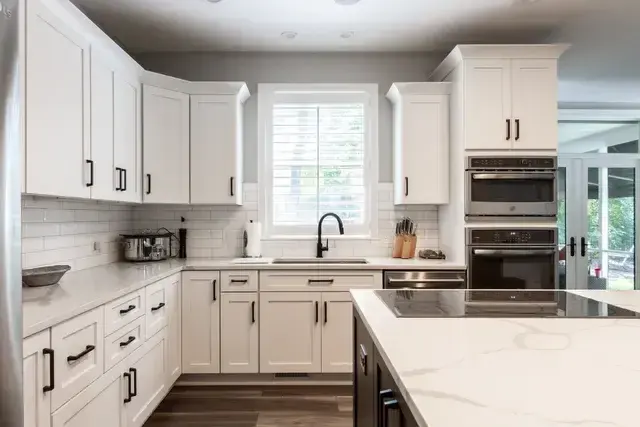
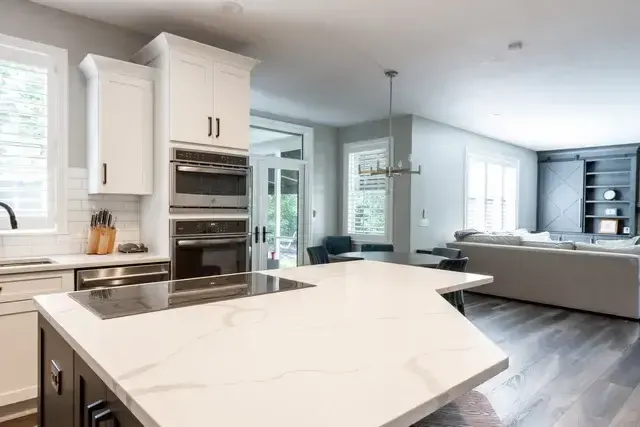
Custom shades measured and installed in GreenfieldPlantation shutters fitted to a Greenfield windowCellular shades in a Greenfield living room
Scope of Work

What Skylight Shades Includes

Every Greenfield job is documented item by item. Here is what the crew covers.

Every unit measured at the glass frame itself, since the finished shaft below it is usually wider and often flared outward

Slope of the glass recorded, because a shade on a pitched plane has to be held against gravity rather than hung from a rail

Tensioned side channels specified on anything that isn't vertical, so the fabric can't belly away from the glass in the middle

Reach assessed out loud at the measure: what a pole can work, what needs a ladder, what nobody should be climbing to at all

Power method settled before the fabric is chosen, because a dead battery over a stairwell is a different problem than one at eye level

Rechargeable wands, trickle charge points and solar charging panels priced into the job rather than mentioned afterward

Battery interval written next to the height of the opening, since Hunter Douglas puts PowerView life at about one year

Low-voltage locations marked for a licensed electrical contractor wherever a hardwired motor is the sane answer

Fabric picked for what the opening actually does wrong, whether that's July glare on a screen or a bedroom lit at sunrise

Cellular fabric considered where the opening bleeds heat in January, with clearance held off the cold glass above it

Shape templated on site for a trapezoid, a triangle or any angled unit that isn't a plain rectangle

Channel finish and fabric color judged from the floor, since the underside is the only face of this shade you will ever see

Radio path tested from where you'll stand to where the motor will sit, because a deep shaft and foil-faced insulation both cut range

Travel limits set top and bottom, then re-checked on a return visit once the fabric has relaxed

A written plan for how the unit comes down again for service, cleaning or a battery change

Debris sitting in the light well pointed out before install, since a shade hides that and doesn't remove it

Written contract with scope, dates and total price, as IC 24-5-11 requires on residential work over $150

Every unit run full travel from the floor with the remote in your hand before the ladder leaves the room

Pricing

What Skylight Shades Cost in Greenfield

Published national ranges put custom-fabricated shades at roughly $250 to $2,600 a window and motorized window coverings at roughly $300 to $1,500 per window installed. Those are national category figures, not a quote for an address in Greenfield. Overhead units sit high in both bands and there are honest reasons why. The fabric runs inside tensioned side channels instead of hanging free. The shape is frequently not a rectangle, so somebody builds a template. Almost every unit is motorized, because nobody wants a pole in the family room, and the motor then needs a charging plan that a wall outlet six feet away would have solved. Access is the last multiplier: the install happens off a ladder or a lift. Greenfield Window Treatments prices these from the measured frame in Hancock County, with the power method decided before the number is written.

By Product

How Skylight Shades Differ by Product

Every product in this trade behaves differently in a room. Here is what that means for this work.

Tensioned side channel track: Aluminum channels fixed to each side of the frame with the fabric held under tension between them. On sloped or horizontal glass this isn't a light-blocking upgrade, it's the thing that stops the fabric from sagging away from the glass.

Cellular skylight fabric: A honeycomb fabric on an overhead track, which is what people specify when the opening is losing heat in the coldest weeks. DOE and ORNL measured up to 20 percent heating energy savings for cellular shades against a bare window.

Solar screen fabric overhead: An open weave rated by openness factor, sized to cut glare while you can still tell it's daylight up there. It's the right call over a kitchen or a stairwell where the complaint is brightness rather than heat or privacy.

Room darkening skylight fabric: An opaque face inside channels, which is as dark as an overhead opening gets. The channels close the side light, and the honest limit is the head and hem, where a small amount still finds its way around the fabric.

Rechargeable battery wand: A wand of cells that slides out of the headrail for charging. On a reachable unit that's a twenty minute job once a year. On an unreachable one, plan the charging point at the order stage rather than discovering it later.

Solar charging panel: A small panel mounted where it actually sees sky, wired to trickle charge the battery wand. Over glass that gets real sun this is the arrangement that keeps a hard-to-reach unit running without anybody hauling a ladder around.

Hardwired low-voltage motor: Power run to the header by a licensed electrical contractor, with our low-voltage locations marked for them. It costs the most up front and it's the only version that never needs a battery, which on high glass is worth arguing about.

Pole-operated manual unit: A track shade worked with a telescoping pole and a hook. It's inexpensive, it never needs power, and it's only pleasant on an opening you can actually reach from the floor with a pole you don't mind storing.

Templated specialty shape: A trapezoid, a triangle or an angled unit built from a physical template taken at your glass. Nothing about these is stock, and the template is why the finished shade follows the frame instead of leaving a wedge of daylight at one corner.

Remote, repeater and scene control: The control layer that makes an overhead shade usable: a handheld or wall remote, a repeater where the signal has to cross a header, and scenes so a bank of skylights moves together instead of one at a time.

Light Control

See What Each Fabric Does To The Light

Pick a fabric below and the window updates. It's a drawing rather than a photograph, so read it as a rough guide to what each family does in a Greenfield room, and to what it doesn't do.

Fabric type

Sheer, 10 percent openness

Ten percent of the weave is open, so you keep the view and most of the daylight. Glare drops a little. After dark, once your lamps are on, someone outside can read shapes through it, which is why this belongs on a view window rather than a bedroom.

Openness factor is printed on the fabric card, so you can compare one line against another before you order anything.

Keeps the viewNot private after dark

Solar, 5 percent openness

The usual pick for a west window or a covered porch. You can still read the yard through it, glare comes down noticeably, and the fabric intercepts a good share of the sun before it reaches you at four in the afternoon.

It also cuts the UV landing on floors and furniture. NFRC puts UV at roughly 40 to 60 percent of fading damage, so this slows fading rather than stopping it.

View and glare controlSlows fading

Solar, 3 percent openness

A tighter weave. The room goes dimmer and the view drops back to an outline. Choose it where the sun is the problem and the view is second, which around here usually means a west wall in July. That's a common call on this side of Indianapolis.

Openness affects how much you see out, not how private you are. A 3 percent fabric still shows silhouettes at night.

View becomes an outlineStrong glare control

Solar, 1 percent openness

Close to a solid fabric with a little view left in it. This is the strongest glare control in the solar family.

The trade is that it darkens the room on a gray January day too. Indianapolis averages a January high near 36F and the light is flat, so think about how the room reads in both seasons before you commit.

Darkest solar optionDim on gray days

Light filtering

No view through it. Daylight comes through the face diffused, so the room stays bright without a hot spot across the television or the kitchen island. This is the default for living spaces.

It isn't private in reverse at night. With the lamps on and the sun down, silhouettes still show.

No view through itBright without the glare

Room darkening

A denser fabric, usually with a liner behind it. Most of the light coming through the face is gone.

Light still arrives around the edges on an inside mount, so a room darkening shade gives you a dim room rather than a dark one. If someone in the house sleeps during the day, say so at the measure and we'll scope it differently.

Dim, not darkEdges stay bright

Blackout

The fabric itself passes essentially no light. What you'll still see is the perimeter. Lutron publishes an inside-mount light gap of about 3/4 inch per side on its Roller 20 and 64 shades, along with a standard factory deduction of 1/16 inch per side, and shades over 120 inches tall or past a 4:1 height-to-width ratio get larger gaps than that.

So if you need a genuinely dark bedroom, that gap has to be dealt with on purpose, either with side channels or by going outside mount. We tell you which one your opening can carry while we're still standing in the room.

Dark facePerimeter needs a plan

Openness factor is a measured fabric spec, so you can compare it line to line. The category names are not measured. One maker's room darkening can behave like another maker's light filtering, which is why the sample books come to the measure and get opened in the room they're going in, at the hour that room has the problem.

Common Questions

Skylight Shades FAQ

Questions we hear most often from Greenfield homeowners considering skylight shades.

Because the fabric is fighting gravity across its face rather than along its length. A shade hanging on a wall gets pulled flat by its own hembar. Lay that same shade at a ceiling pitch and the middle drops away from the frame, which reads as a sag and lets a wedge of daylight down both edges. Tensioned side channels grip the fabric edge and hold it against the opening through the full travel. They're aluminum, they're visible from the room below, and in a vaulted Willowview great room they're what the ceiling reads as. There's no version of this product that works without them, so we quote them in rather than as an upgrade.
Usually, though the measure decides it and the measure is awkward. Overhead units in the city's 1,202 houses from the 1970s were often built into a shallow well with a finished shaft below them, so the shade can mount at the glass or at the bottom of that shaft. Mounting low is easier to reach and easier to service. Mounting at the glass keeps the shaft from becoming a heat trap in July. What we can't do is guess from the floor, so we measure at three points off a ladder before quoting and check whether the shaft is square, which after fifty years on Hancock County clay it often isn't.
You pick the answer before you buy rather than after. A rechargeable battery wand can be dropped and lifted on a telescoping pole where the unit is accessible from the floor below and the pole actually reaches. A small solar panel at the glass gives a trickle charge and works well on a south facing unit, less well on a north one. Or you run low voltage to the head of the opening and never think about it again, which is realistic while a ceiling is open and unrealistic afterward. On a vaulted great room in Willowview, the wire is the answer worth paying for.
It helps a lot and it doesn't finish the job. Indianapolis records a July average high of 85.2 degrees, and overhead glass takes the sun closer to perpendicular than any wall opening does, so the load through it is the harshest in the house. A room darkening or solar fabric at the ceiling cuts the direct beam and the glare landing on your floor. What it can't do is stop the glass itself heating and radiating into the room behind the shade. If the great room is genuinely unusable, an exterior product over the opening does more, though on a ceiling plane that's a far bigger job.
Yes, by a wide margin. The 992 Greenfield houses built before 1940 almost never have overhead glass, because the Queen Anne and Italianate houses in the Residential Historic District got their daylight from tall openings with high heads instead. Overhead units belong to the newer two thirds of the city: the 2,395 houses from the 2000s and the 1,615 from the 2010s, on the Bridgewater and Flagstone blocks and out at Meridian Springs. That matters for us because those openings are factory square and repeat within a plan, so once we've measured a pair in one house the next house on the same elevation goes faster.
Rarely the fabric. Channels collect dust and grit that the shade then drags through on every cycle, so travel gets rough if nobody wipes them out once a year. Batteries reach the end of that published one year cycle, and the charging chore is the thing people abandon first, which is why the power decision matters more here than the fabric decision. Travel limits also drift, so the shade starts stopping short of the frame and leaving a line of light along one edge. All of that is maintenance rather than failure, and on a Meridian Springs ceiling we walk through it at handover so the routine belongs to you rather than to a service call.
Four things stack up. The fabric runs in tensioned side channels rather than hanging off a headrail, so there's more hardware in the product. The opening is often a trapezoid or a triangle, which means a template and a one-off build. Almost every unit gets a motor, since a pole is only charming for about a week. Then there's access, because installing above a two story room is ladder work rather than step-stool work. Nationally, custom shades run about $250 to $2,600 and motorization adds roughly $300 to $1,500 per window installed.
Tension. On a vertical window gravity does the work and the hembar hangs straight. Tip that plane over and the same fabric wants to hang away from the glass in the middle, which looks wrong and lets light run around the edges. So an overhead unit rides in aluminum channels down each side, with the fabric held taut between them. Get the channels parallel and the fabric tracks correctly. Get them out of parallel by a sixteenth and the shade fights you at one end, which is why the frame gets measured rather than the finished opening below it.
Somebody gets a ladder, which is exactly why we settle the power method before the fabric. Hunter Douglas states that PowerView battery life is about one year, and that number is the single most under-disclosed cost on a motorized job at any height. Overhead it turns into an access problem as well as a cost. The answers are a rechargeable wand you can reach, a solar panel that trickle charges it, or hardwired power run to the header. We price those honestly at the quote so the yearly reality is in front of you.
Usually yes, and it's the version we push on genuinely unreachable glass. A low-voltage supply comes to the header and the motor never needs a battery again. The electrical work belongs to a licensed electrical contractor, and we mark our low-voltage locations for them so the wire lands where the motor actually is. It costs more at the start and it costs nothing every spring after that. On a shade that needs a lift to service, that math stops being close.
Close, if you buy the right build. An opaque fabric running inside side channels closes off the side light, which on overhead glass is where most of it wants to come in. What we won't tell you is that it will be perfect, because there's still a head and a hem where a thin line can show. Compare that to an ordinary inside mounted shade on a wall window: Lutron publishes 3/4 inch per side of light gap on their Roller 20 and 64 product, and channels are how you close that. Overhead, channels aren't optional anyway.
It helps with the two things you can feel. Overhead glass takes sun for more hours than any wall window in the house, and in a Greenfield July, with average highs at 85.2F, a bare skylight is a fixed heat source over a room you can't rearrange. A screen or an opaque fabric cuts the direct beam and takes the glare down. On the heating side, cellular fabric is the one with documented testing behind it, where DOE and ORNL measured up to 20 percent heating energy savings against a bare window. We won't turn any of that into a dollar figure for you.
Worth planning for rather than ignoring. In January, when average lows around Hancock County sit near 20.9F, overhead glass runs cold and the air in the shaft is warmer and wetter than you'd guess. A shade held tight against that glass creates a still pocket where moisture can collect. We keep clearance between the fabric and the glass, we don't seal the shaft, and in a bath or a kitchen with a skylight we talk about running the shade open part of the day through the coldest weeks.
At the glass frame, never at the finished opening you see from the room. Most shafts are wider than the glass and many are flared, so a shade measured at the ceiling line would be badly oversized and would have nowhere to mount. We measure the frame in both directions, record the slope, check the diagonal, and note where every screw can actually land. On an angled unit that measure becomes a template instead of a set of numbers.
Usually, with a template. Fixed angled and triangular units get built to a physical pattern taken at the glass, and they either operate along one axis or stay fixed as a permanent filter, depending on the geometry. A trapezoid with two parallel sides is the friendliest shape and often operates normally. A true triangle frequently ends up as a fixed panel, which is a real answer rather than a failure, and it's better than an oversized rectangle leaving a lit wedge in the corner.
Gently, and less often than you'd think. Vacuum the face on low with a brush head when you can reach it, and leave the channels alone unless something is actually binding in them. The dust and insect debris that collects in a light well is worth clearing before we install, because a shade covers it up rather than dealing with it, and you won't want to revisit that decision later. If the unit is above a stairwell, ask us how it comes down before you need it to.
Yes, on any opening you can reach comfortably with a pole. A pole-operated track shade costs a fraction of a motorized unit, it never needs power, and it works fine in a room with an eight or nine foot ceiling where the pole lives in a closet nearby. Above a two story space it stops being reasonable, because the pole gets long and unwieldy, and most people quit using it by the second season. That's the honest dividing line we use.
We test it at the measure rather than after the install. Radio range gets cut by masonry, by metal in the framing and by foil-faced insulation, and a skylight sits behind more of that than a window does because the signal has to get up through a shaft and past a header. Where it's marginal, a repeater goes in on the same floor and the problem disappears. Where a house has several overhead units, a hub placed for signal rather than for whichever shelf is closest to the router usually settles it.
It ages faster, yes, and it's the same reason you wanted a shade. Overhead glass takes more hours of direct sun than anything else in a Greenfield house, so the fabric on that unit is working harder than the one in your living room. Solar screen weaves and vinyl-faced fabrics hold up best. On the room side, NFRC attributes roughly 40 to 60 percent of fading damage to UV, so the shade slows what happens to your floors and furniture below it. It reduces that. It doesn't end it.
Two to five weeks is the normal custom fabrication window, and overhead units sit toward the longer end because the channels, the motor and any templated shape all get built to your specific frame. Nothing there is a delay. It's a factory making a one-off. You get the fabrication window in writing next to the scope, the dates and the total price, which the Indiana Home Improvement Contract Act requires on residential work over $150. If a factory date moves, you hear it from us in the week we hear it.
Free In-Home Measure

Schedule Your Free In-Home Measure in Greenfield

Contact Information

Reach Us Directly

Our team prioritizes scheduled measures and service calls, and books in-home measures during business hours.

Office
1417 Commerce Avenue, Indianapolis, IN 46201
Hours
Mon-Fri 8a-6p
Service Area
Greenfield, IN and Surrounding Areas

Ready to Book Your Measure?

Call us to set up an in-home measure, or to ask about a treatment that has stopped working. We will talk it through on the phone first.

Service area

Serving Greenfield and the surrounding area

Call NowGet Quote