Blind Repair in Greenfield: What Actually Breaks and Why
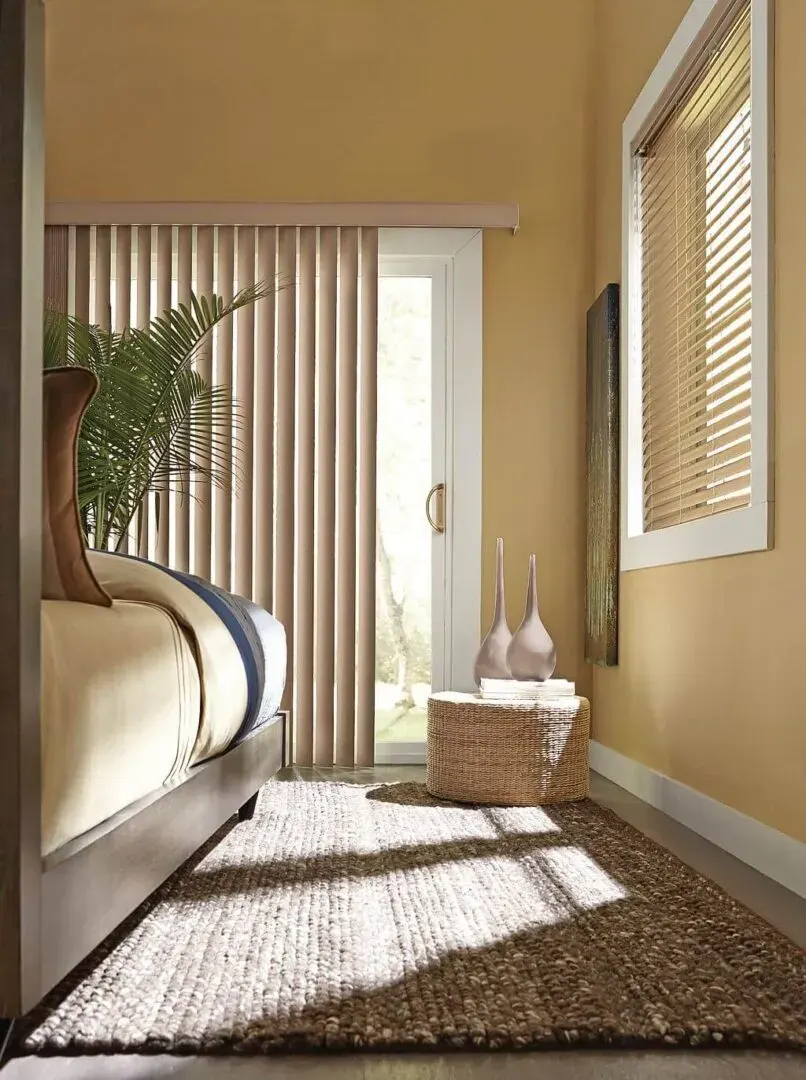
There is a version of a shade install that works and a version that's finished, and homeowners can usually feel the difference without being able to name it. The bottom rail sits level. The light gaps match side to side. The shade runs top to bottom with one hand. Nothing rattles. Here is the checklist behind that, whether we are hanging something new in Greenfield or handing back something we repaired.
Blinds almost never fail all at once
The useful thing to understand about window coverings is that they're assemblies. A horizontal blind has a headrail, a cord lock, a tilt mechanism, lift cords, ladder strings, slats, and a bottom rail. When something stops working, one of those parts has failed and the other seven are fine. Replacing the whole blind because a nylon gear stripped is like replacing a lamp because the switch wore out.
So the first thing worth doing is naming the symptom precisely. Does the blind refuse to stay up, or does it refuse to come down? Does the wand spin freely, or does it stop hard? Does one side of the blind ride higher than the other? Does the chain slip the moment you let go of it? Each of those points at a different part, and the part is almost always available.
Clutches, chains, tensioners, and cordless springs
Roller shades, woven woods, solar shades, and many cellular shades lift on a continuous cord loop or a bead chain that drives a clutch inside the end of the roller tube. The clutch is what holds the shade at whatever height you left it. When it wears, the chain slips under load and the shade creeps down, or the chain jumps the sprocket and jams.
Two things cause premature clutch wear. One is a shade that is simply heavier than the clutch class it was built with, which is a specification problem rather than a defect. The other is a missing or unfastened chain tensioner. That tensioner isn't decorative. It keeps tension on the loop so the chain tracks properly, and it's a safety device that is supposed to be fastened to the wall or the frame.
Cordless shades work differently. A spring motor in the headrail is tensioned to balance the weight of the fabric. Over years the spring relaxes and the shade starts drifting down after you set it. That's a tension adjustment or a spring cartridge, not a dead shade.
Check the install before you blame the product
A surprising share of service calls around Greenfield turn out to be mounting problems. A bracket screwed into drywall with no anchor works loose and lets the headrail tip. A headrail racked in brackets that aren't level will bind at one end. A roller shade whose tube is even slightly out of level will telescope, meaning the fabric walks steadily to one side as you raise and lower it. A shade set into an opening with too little depth rubs the trim on the way down. None of that is a broken shade. It's a bracket that needs to come off and go back on properly, and that is worth checking in a Greenfield house before anyone orders parts.
Finished means level, even light gaps, full travel, and hardware that matches from window to window across a room. It also means the mess is gone and somebody showed you how it works. Greenfield Window Treatments installs and repairs to that standard in Greenfield, and we write down what we did. We are insured and insured. Call (317) 854-7158 if a shade in your house isn't behaving the way it should.
Restringing, which is the most common job there is
On a horizontal blind, lift cords run from the headrail down through holes punched in every slat to the bottom rail. Ladder strings run down both faces of the slats with little rungs between them, and those rungs are what hold each slat and tilt them together. Cord wears where it bends, which means at the cord lock and at the slat holes.
The symptoms are recognizable. The blind hangs crooked with one side higher. The cord looks fuzzy and fat where you grip it. One slat sits lower than the rest, which is a broken ladder rung rather than a lift cord problem. Eventually a lift cord snaps and the blind won't raise at all.
Restringing means pulling the whole cord path out, then running new cord through every slat and back up through the headrail into the cord lock. It's fussy work and it takes patience, but it isn't exotic. It returns a blind to full function for a small fraction of what a new custom unit costs. On wood and faux wood blinds the ladder tape often gets replaced at the same time, because a snapped rung will keep dropping the same slat no matter how good the new lift cord is.
Cord locks
The cord lock is the small mechanism inside one end of the headrail that pinches the lift cord when you pull it to the side. Inside it there is a toothed pin that rolls against the cord. When it wears, or when a fuzzy cord gets too thick to seat properly, the blind stops holding position and slides down on its own. The opposite failure also happens, where the lock grabs and won't release.
This is one of the cheapest repairs in the trade. The lock lifts out of the headrail and a new one drops in, then the cord gets rethreaded. If the cord is already worn where it passed over the lock, it gets replaced at the same time, because putting a tired cord back into a fresh lock just starts the clock again.
Tilt gears and wands
The tilt mechanism is a small worm gear in the headrail that turns a tilt rod running the length of the blind. The wand hooks into the gear. Turn the wand and the rod rotates the ladder strings, which tips every slat at once.
Almost all tilt failures come from the same cause. Someone keeps turning the wand after the slats have reached their stop, and the nylon gear strips. The symptom is a wand that spins freely with a faint clicking sound and no movement in the slats. That's the single most common wood blind failure we see in Greenfield homes, and it is a part swap rather than a new blind. The gear pulls out of the headrail and a new one goes in, sometimes with a new tilt rod if the rod itself has rounded off.
Wands break too. The hook snaps off at the top, or the wand cracks near the grip. Both are stock parts, and getting the length right matters more than people expect. A wand that's too short on a tall window is why people yank on it.
Motors and batteries
When a motorized shade stops responding, work through it in order. Check the battery first, because manufacturers commonly publish about a year of runtime for a battery wand and almost nobody writes down the install date. Next check travel limits. A motor that runs but stops in the wrong place has lost its programmed upper or lower limit, and resetting limits is a procedure, not a repair. Then check pairing. Remotes and hubs drop their association with a shade after a battery change or a power event more often than motors actually fail.
Genuine motor failure is the least likely item on that list. When it happens, the motor usually comes out of the tube and a replacement goes back in, with limits reset afterward. Retrofitting a motor into a shade that was never built for one is sometimes possible on a roller tube of the right diameter and rarely worth it on a cellular shade.
Frequently Asked Questions
Is it worth repairing a blind, or should I just buy a new one?
On a single failed part, repair is usually the better value. A cord lock, a tilt gear, a wand, or a restring costs a small fraction of a new unit, and everything else in the blind is still working. The decision flips when the fabric has faded and gone brittle, when the parts for a discontinued line are gone, when the covering never fit the opening properly in the first place, or when you have already repaired the same unit twice. The blunt test is whether the thing would be worth keeping if it worked perfectly today.
My wood blind wand spins and the slats don't move. What's that?
That is a stripped tilt gear, and it's the most common wood blind failure there is. The wand drives a small worm gear in the headrail that turns a tilt rod along the length of the blind. When someone keeps turning after the slats have hit their stop, the nylon teeth shear off. You'll usually hear a faint clicking as the wand spins. The gear pulls out of the headrail and a new one drops in, sometimes with a new tilt rod if the rod has rounded off.
Can a blind be restrung, or is that a throwaway situation?
It can almost always be restrung. Lift cords wear where they bend at the cord lock and where they pass through the holes in each slat, and eventually one frays or snaps. Restringing means pulling the entire cord path and running fresh cord through every slat and back through the headrail. It is patient work rather than difficult work. On wood and faux wood blinds the ladder strings often get replaced at the same time, because a broken rung is what makes one slat hang lower than the others.
My motorized shade stopped responding. What should I check first?
Batteries, and it isn't close. Manufacturers commonly publish about a year of runtime for a battery wand, and almost nobody records the install date. If fresh power doesn't fix it, check travel limits next, because a motor that runs but stops in the wrong place has lost its programming rather than failed. Then check pairing between the remote or hub and the shade, which drops more often than people expect. An actual dead motor is the least likely cause on that list.
 Wood Blinds Room by Room in a Greenfield House: Design Notes
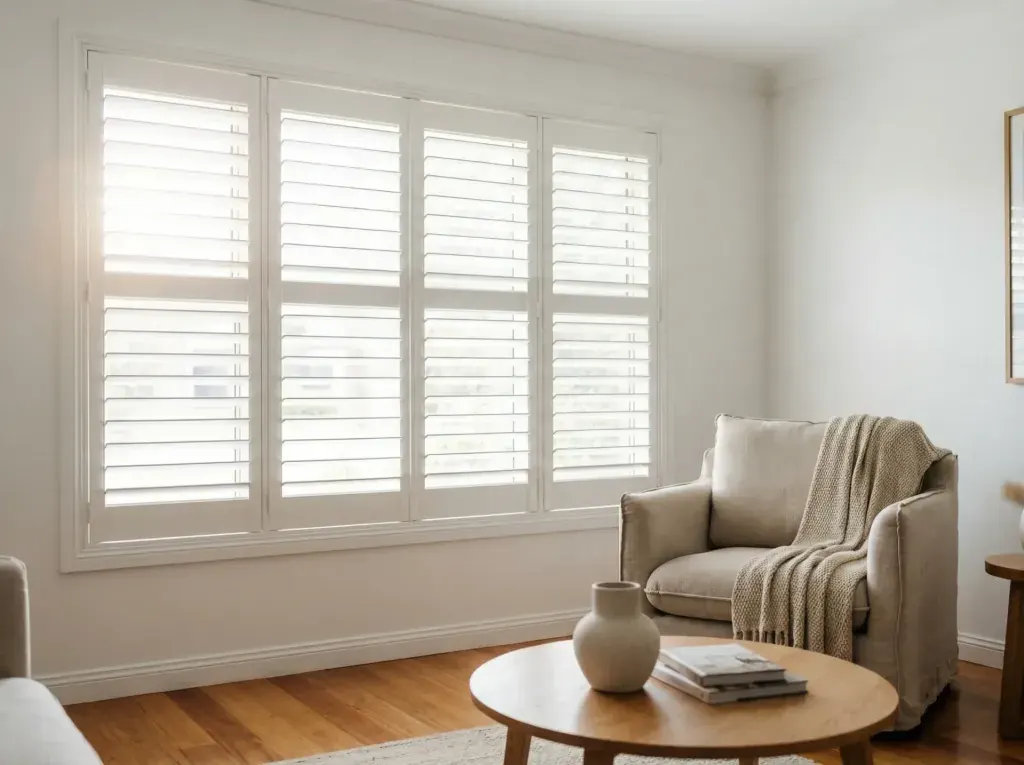 Plantation Shutter Style Room by Room in Greenfield Homes
 Designing Custom Drapery for Greenfield Rooms, One at a Time