Retractable Awnings in Greenfield: How to Size and Mount One
An awning isn't really a product decision, it's a schedule decision. You're buying back specific hours on your patio, and which hours those are depends on which way the wall faces and what time of year you're out there. Then there's the other half of the Indiana calendar, when the awning is rolled up and you'd better hope it went away dry. Here's how one lives through a full year at a Greenfield house.
What a retractable awning is, mechanically
A lateral arm retractable awning is a roll of fabric on a tube, mounted to the wall, with two spring loaded folding arms that push the front bar away from the house. There are no posts at the outer edge, which is the whole point. The arms carry the load and hold tension on the fabric, and a gear or a motor turns the tube to roll it in and out. Everything about the product follows from that: the arms are under real spring pressure, the wall takes the entire load, and the fabric is a structural part rather than a decoration.
What your wall can hold
An extended awning is a long lever, and wind under it pulls up as much as down. The anchors are the part of this job nobody sees and the part that fails when it's done wrong.
- Solid masonry: heavy sleeve or wedge anchors set into brick, and ideally into the mortar bed pattern the manufacturer specifies rather than wherever the bracket lands.
- Brick veneer over a frame wall: the veneer is a facing, not structure. Fasteners have to reach the rim board or blocking behind it, and the gap gets sleeved so tightening doesn't crush the brick face.
- Stucco or a foam backed finish: the finish carries nothing. The bracket needs to land on framing behind, with the penetration sealed properly.
- Wood frame walls with a light exterior finish: lag into the band board or into blocking added from inside. Blocking is the honest fix when the bracket spacing doesn't line up with what's already there.
- Under a covered porch: some units can hang from the structure above instead of the wall, which lowers the front bar and needs the framing checked first.
Older homes around Greenfield throw curveballs here. Balloon framing, mortar that crumbles, a band board that isn't where you'd expect. That's why a site visit happens before an order, not after.
Fabric: solution dyed acrylic versus everything else
Solution dyed acrylic is the standard for a reason. The pigment goes into the liquid acrylic before the fiber is even formed, so color runs all the way through the fiber instead of sitting on the surface. Sun exposure slowly wears the outside of any fiber, but with color throughout, the fading is slowed considerably compared to a fabric dyed after weaving. Acrylic also breathes, so hot air moves through instead of building up underneath, and mildew has nothing in the fiber to feed on.
Vinyl coated polyester is the main alternative. It's waterproof rather than water resistant, which sounds better than it is: water sheets off it in a downpour, but it holds heat underneath and it can get brittle in a hard freeze. Piece dyed and painted fabrics are the cheap tier. They look fine for two summers and then look tired. If someone quotes an awning noticeably below the market, the fabric is usually where the money came out.
Projection and width, the two numbers that matter
Width is how far the awning runs across the wall. Projection is how far it reaches out from the wall. People fixate on width because it's the number you see, but projection is what decides whether you actually sit in shade.
Two rules constrain the choice. First, on nearly all lateral arm units the width has to be greater than the projection, because the arms need room to fold. A narrow stretch of wall caps how far out you can go no matter what you're willing to spend. Second, mounting height sets the useful projection. The awning pitches downward as it extends, usually somewhere around 15 to 25 degrees, so the front bar ends up lower than the wall bracket. Mount at eight feet with a twelve foot projection and the front edge lands low enough that a tall person notices.
Measure the space you actually use rather than the wall. A table and chairs need about ten feet of depth to sit fully covered, because people push back from the table. A grill area needs less. Then add a couple of feet of width past the ends of the furniture, since morning and late day sun comes in at an angle and the shade patch slides sideways across the day. Most Greenfield patios need more projection than the homeowner first guessed.
Winter, honestly
A retractable awning is a three season product in Indiana. Snow load on an extended awning will bend arms and can tear fabric off the tube, and freeze thaw cycles work at any water sitting in a fold. Retract it for the season, and retract it dry. Rolling up wet fabric and leaving it for four months is how mildew gets started, and mildew stains are largely permanent even though the fabric itself isn't damaged.
A full cassette wraps the rolled fabric in a closed housing and is the least work over a winter. A semi cassette shields the top and the front but leaves the underside open. An open roller with no hood should get a protective cover for the winter or the fabric should come off entirely. If the unit is motorized, cut the power at the switch so a stray remote press doesn't extend it into a foot of snow. That's a real thing that happens in Greenfield every winter.
Spend on fabric and anchors, and be honest about whether you'll crank a handle. National ranges put an installed retractable awning somewhere around $1,000 to $6,000, and where you land is mostly size. Get the fabric line, the anchor detail and the warranty terms written into the contract Indiana already requires. Greenfield Window Treatments serves Greenfield and IN communities. Reach us at (317) 854-7158.
Manual or motorized
A manual awning uses a gear box and a crank handle. It's reliable, there's nothing to charge, and it works during an outage. It also takes a minute or two of cranking each way, and that friction is exactly why manual awnings end up left out in weather they shouldn't be in.
A motorized unit puts a tubular motor inside the roller tube. Hardwired motors need a circuit run to the wall, which usually means an electrician. Battery and plug in options avoid that. Travel limits get set at install so the awning stops in the same place every time, and a remote or a wall switch runs it. The real argument for a motor isn't laziness. It's that an awning you can retract in four seconds from inside the kitchen actually gets retracted.
Sensors
A wind sensor is the one accessory worth arguing for. It reads movement at the front bar or the arm and retracts the awning automatically past a threshold you set. Wind is the thing that destroys these units, and it usually happens while nobody's home. Sun sensors extend the awning when light crosses a set level, which helps keep a room from heating up while you're at work, though plenty of people find them annoying and shut them off. Motion sensors that respond to fabric flutter are a cheaper alternative to a true anemometer. Whatever you install, remember that a sensor needs power at the awning and that it does nothing if the unit is switched off at the remote.
Frequently Asked Questions
How far out should the awning reach?
Measure the furniture, not the wall. A table with chairs needs about ten feet of depth to stay covered, since people push back from the table when they sit. A grill area needs much less. Then check two limits. Most lateral arm units require the width to exceed the projection, so a narrow wall caps how far you can go. And the awning pitches downward as it extends, so a low mounting height puts the front bar in your line of sight.
Can an awning mount to brick?
Yes, but the answer depends on whether the brick is structural or a veneer over a frame wall. Solid masonry takes heavy sleeve or wedge anchors placed where the manufacturer specifies. Brick veneer is a facing that carries almost nothing, so fasteners have to reach the rim board or blocking behind it, with the gap sleeved so tightening doesn't crush the brick face. That determination happens at a site visit, before anything is ordered.
Do I really need a wind sensor?
It's the accessory we push hardest. Wind is what destroys retractable awnings, and it almost never happens while you're standing under it. A wind sensor reads movement at the arm or the front bar and retracts the unit automatically once it passes a threshold you set. It costs a small fraction of the awning and protects the arms, which are the expensive part to replace. If you're gone during the day, treat it as required.
What is solution-dyed acrylic and why does it cost more?
The pigment is mixed into liquid acrylic before the fiber is formed, so color runs all the way through each fiber rather than coating the outside. Sun wears the surface of any fabric, but with color throughout, fading is slowed rather than showing as a washed-out patch. Acrylic also breathes, so hot air passes through instead of building up under the awning. Cheaper fabrics are dyed after weaving and look tired much sooner.
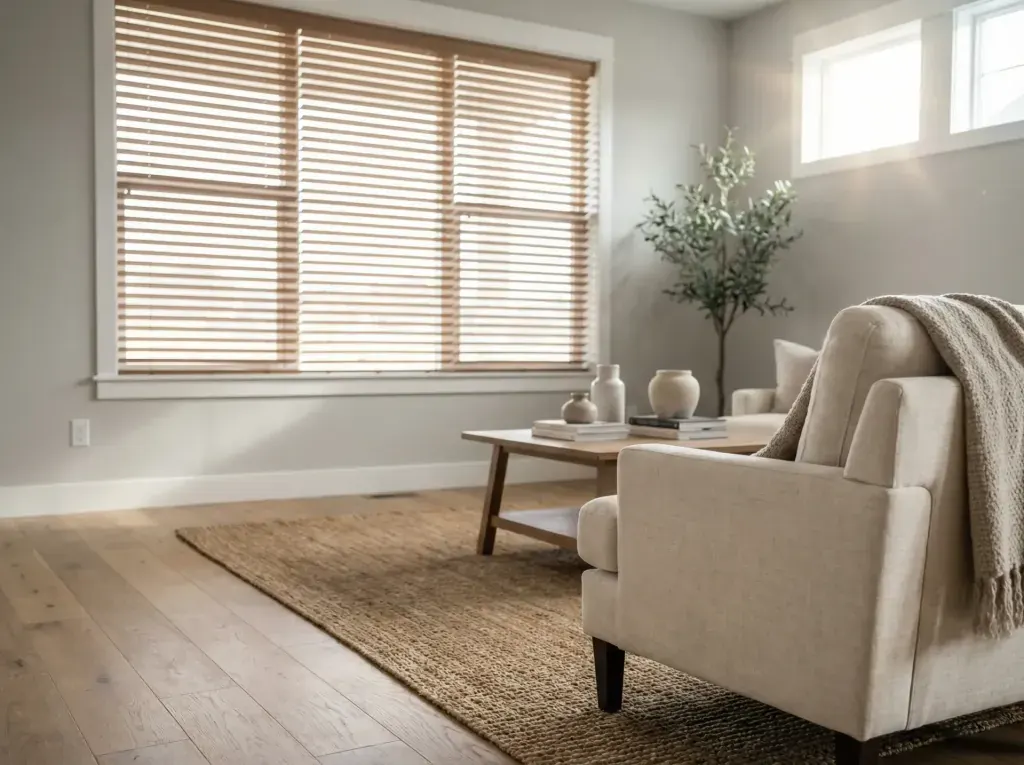 Wood Blinds Room by Room in a Greenfield House: Design Notes
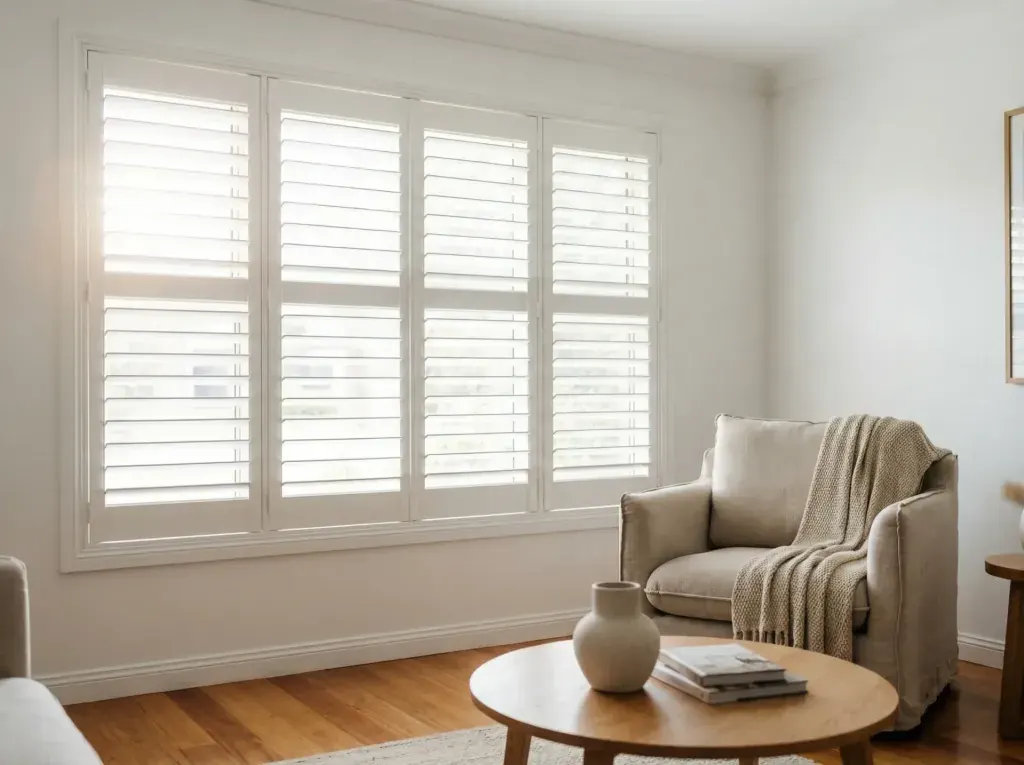 Plantation Shutter Style Room by Room in Greenfield Homes
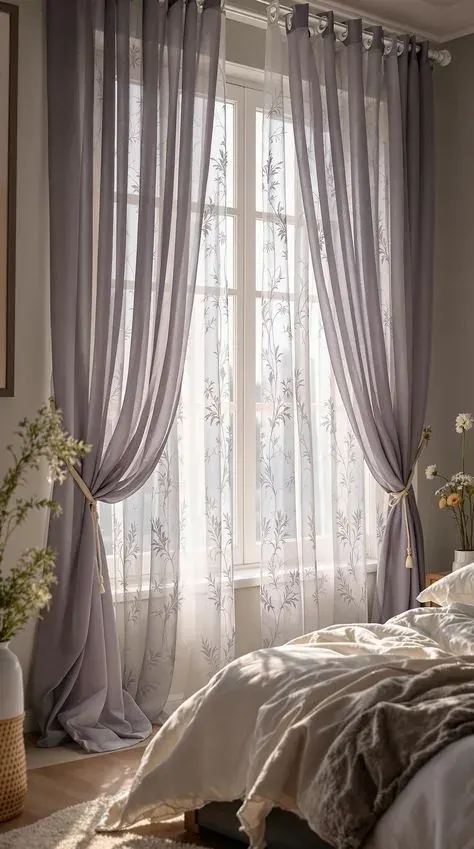 Designing Custom Drapery for Greenfield Rooms, One at a Time